





Sock Care Best Practices to Keep Your Pairs Going for Years
Good sock care starts with a few simple habits: wash socks inside out, use a gentle detergent, choose cold or warm water, and avoid excessive heat when drying. Rotating your favourite pairs also prevents any one pair from taking all the wear.
These small changes can make a noticeable difference to how long socks retain their softness, shape, colour and elasticity.

For the best results:
- Turn socks inside out before washing. This helps remove sweat, dead skin and odour from the fabric closest to your feet while protecting the outer surface from unnecessary friction.
- Use a mesh laundry bag for delicate socks. Wool, merino, cashmere and other fine-knit socks benefit from extra protection during a machine wash.
- Always check the care label. Follow the washing and drying symbols provided by the manufacturer, particularly for temperature-sensitive fibres such as wool and cashmere.
- Match the detergent to the material. A suitable sports detergent can help with heavily worn athletic socks, while merino, wool and cashmere are better washed with a gentle detergent designed for wool and delicate fibres.
- Avoid fabric softener when possible. It can leave a coating on fibres and may reduce the moisture-wicking performance of technical and athletic socks.
- Keep elastane away from high heat. If your socks contain elastane, spandex or similar stretch fibres, avoid high-temperature tumble drying, as repeated heat exposure can weaken elasticity.
- Air-dry delicate and luxury socks. Lay wool and cashmere socks flat where possible to help them maintain their original shape.
You don't need an elaborate laundry routine to make good socks last. Gentle washing, lower temperatures, careful drying and rotating your pairs are the four habits that matter most.
The ideal method does, however, change depending on whether you're caring for cotton, bamboo, merino wool, cashmere, compression or performance socks. Below, we'll explain exactly how to care for each material - and which common laundry mistakes to avoid.
Key Takeaways
Consistent sock care best practices, inside-out washing, gentle detergent, correct temperature, and air-drying, can add years to a pair’s usable life.
| Point | Details |
|---|---|
| Wash inside out | Exposes trapped sweat and bacteria directly to detergent, improving hygiene and reducing pilling. |
| Match temperature to fibre | Wash wool and cashmere at 30°C or below; cotton and synthetics can handle up to 40°C. |
| Skip high heat drying | Tumble drying on high heat is the leading cause of lost elasticity in cuffs and compression socks. |
| Rotate your collection | Wearing the same three pairs wears them out fast; a full rotation spreads damage evenly. |
| Choose easier-care materials | Sock Geeks’ ethically sourced merino and cashmere ranges hold shape and resist odour with simpler upkeep. |
Table of Contents
- Why sock care best practices actually extend lifespan
- What sock fabrics and care labels actually tell you
- How should you wash socks step by step?
- How to dry socks without shrinking or stretching them
- How do you get stains and smells out of socks?
- How should you store and maintain your socks?
- Do merino, cashmere, and performance socks need different care?
- How often should you actually wash your socks?
- Care by material: a quick reference chart
- Why turning socks inside out actually works
- What actually works, according to Amanda
- Want socks that need less babying?
- Sources
- FAQ
Why sock care best practices actually extend lifespan
Three things kill socks: heat, friction, and harsh chemicals. Heat breaks down the elastane fibres that keep a cuff snug, which is why socks that once hugged your ankle end up pooling around it after a few months in a hot dryer. Friction from repeated wear and rough machine agitation thins the heel and toe, producing the fuzzy pilling you see on older pairs. Harsh detergents and bleach strip dye and degrade cotton and wool fibres, turning whites grey and colours dull faster than they should.
Each of these has a visible fingerprint:
- Heat damage shows up as loose cuffs that no longer grip the ankle.
- Friction damage shows up as bobbling, thin patches, and eventual holes at the heel or toe.
- Chemical damage shows up as fading, greying, and a musty smell that never fully lifts.
Textile-care specialists consistently point to gentler washing and air-drying or low tumble heat as the single biggest lever for slowing all three. It’s not complicated. It’s just consistent.
What sock fabrics and care labels actually tell you
Not every sock behaves the same way in the wash, and the fibre content on the cuff label tells you exactly how much heat and agitation a pair can survive. Cotton tolerates warm water and moderate agitation well. Wool and cashmere cannot handle heat or vigorous movement without felting. Nylon and elastane blends, the stretchy fibres that hold a sock’s shape, degrade under high heat regardless of what the rest of the sock is made from.
Reading the label matters more than most people assume. A small tag might say “cold wash only,” “do not tumble dry,” or “hand wash recommended.” These aren’t suggestions from an overcautious manufacturer. Wool and cashmere labels in particular are warning you about felting, a one-way process where fibres lock together permanently under heat and friction.
Sorting by fibre matters more than sorting by colour when the load includes wool or performance synthetics. A white cotton sock and a white wool sock should never share a wash cycle, even though colour separation would put them together.
- Separate wool and cashmere from everything else, regardless of colour.
- Group performance synthetics together to protect their moisture-wicking coating.
- Sort cotton and poly-cotton blends by colour as usual.
- Keep compression socks separate and always check the manufacturer’s label first.
| Fibre | Wash temperature | Recommended detergent |
|---|---|---|
| Cotton | Warm (40°C) | Standard liquid detergent |
| Poly-cotton blend | Warm (30 to 40°C) | Standard liquid detergent |
| Merino wool | Cold (30°C or below) | Wool-specific wash |
| Cashmere | Cold, hand wash preferred | Wool-specific wash |
| Nylon/elastane blends | Cold to warm (30°C) | Mild liquid, no bleach |
| Performance synthetics | Warm (40°C) | Enzyme-based detergent |
How should you wash socks step by step?
Start before the sock even goes near water. Spot-treat oil, grass, or wine stains with a small amount of detergent worked into the fabric, and shake or brush off any solid dirt so it doesn’t grind into the fibres during the wash.
For machine washing:
- Turn every sock inside out before loading the machine.
- Pair socks together, or clip them, so they don’t scatter and get lost behind the drum.
- Put delicate wool, cashmere, or compression socks in a mesh laundry bag to stop snagging and stretching.
- Select a gentle or delicates cycle, not a standard heavy-duty cycle.
- Wash cotton and synthetics in warm water; wash wool and cashmere in cold water or below.
- Use a standard liquid detergent for cotton and synthetics, an enzyme detergent for heavily sweated performance socks, and a dedicated wool wash for merino or cashmere.
- Skip bleach and fabric softener entirely. Bleach degrades elastic fibres, and softener coats the fabric, which cuts moisture-wicking performance and traps odour instead of releasing it.
For hand washing, which suits cashmere and heavily worn wool best: soak the socks in cool water with a wool wash for a few minutes, swirl them gently with your hands rather than scrubbing, and rinse until the water runs clear. Squeeze out excess water gently rather than wringing, which distorts the fibres, then roll the sock in a towel and press to draw out remaining moisture before laying it flat.
Pro Tip: If you run or train regularly, keep a separate enzyme detergent just for your athletic socks. Standard detergent doesn’t break down the oils and bacteria that build up from sweat nearly as well, and you’ll notice the odour difference within a wash or two.
How to dry socks without shrinking or stretching them
Air-drying is the gentlest option for every fibre, and it’s the single best defence against shrinkage. Lay socks flat on a rack or hang them by the cuff, and turn them once so both sides dry evenly. Keep coloured and patterned socks out of direct sunlight, because ultraviolet light breaks down dye molecules and fades colour faster than almost anything else in the care routine.
If you need to use a tumble dryer, keep it on low or no heat, run a short cycle, and pull the socks out while they’re still slightly damp to finish drying on a rack. High heat is what actually ruins elastane. It doesn’t just shrink cotton fibres; it permanently weakens the stretch that keeps a cuff snug.
- Never iron socks; the flat heat can melt synthetic fibres.
- Keep socks off radiators and other direct heat sources, which dries out elastic from one side.
- If a wool sock has already felted or shrunk slightly, a lukewarm soak with hair conditioner can sometimes relax the fibres enough to reshape it while damp.
- Rotate which side faces up or out during drying to prevent uneven fading.
How do you get stains and smells out of socks?
Different stains need different approaches, and treating them in the wrong order often sets them permanently.
- Blot first, always. For blood or wine, blot rather than rub to avoid spreading the stain into clean fibres.
- Pre-treat with cold water. Blood and grass stains respond better to cold water; hot water cooks protein-based stains into the fabric.
- Grease and oil need a small amount of dish soap worked into the stain before washing, since standard detergent alone often isn’t strong enough to break down oil.
- Soak before washing rather than throwing a stained sock straight into the machine; a 30-minute soak does most of the work.
- Wash as normal, following the fibre-appropriate temperature and detergent from the table above.
For odour, an enzyme detergent breaks down the bacteria causing the smell far more effectively than a standard wash. A short soak in a vinegar and water solution before washing works as a natural alternative. Whatever method you use, dry socks completely before putting them away. Damp storage is where mustiness actually develops. Avoid bleach or peroxide on any coloured sock, and be cautious with both on wool or cashmere, since the chemicals can weaken protein fibres as easily as they lift stains.
How should you store and maintain your socks?
Fold socks rather than balling them up. Balling stretches the cuff elastic over time, which is exactly the kind of slow damage that goes unnoticed until a favourite pair suddenly feels loose. A drawer divider or simple fabric organiser keeps pairs from bunching into a cramped mass that stretches everything inside it.
- Fold, don’t ball, especially for wool and compression socks.
- Use drawer dividers to stop socks compressing into tight bundles.
- Rotate through your full sock collection rather than reaching for the same three pairs, which spreads wear evenly and extends the life of the whole drawer.
- Darn small holes before they widen, and trim loose threads rather than pulling them.
- De-pill wool and cotton socks with a fabric shaver every few weeks to keep them looking fresh.
Pro Tip: Clip socks together with a small pin or a designated sock clip before they go into the wash. It sounds fussy, but it’s the single easiest way to stop losing socks in the machine or dryer.
Do merino, cashmere, and performance socks need different care?
Yes, and treating a £30 cashmere pair the same as a cotton crew sock is how expensive socks die young.
Merino wool resists odour naturally thanks to its fibre structure, but it still needs gentle handling. Wash it cold with a wool-specific detergent and lay it flat to dry rather than hanging it, which can stretch the fibre under its own wet weight. Our guide on how to wash wool socks covers the temperature and detergent specifics in more depth.
Cashmere is even more delicate. Hand wash it or use the most delicate machine cycle available, always with a wool wash such as Nikwax Wool Wash. Reshape the sock while it’s still damp, since cashmere holds whatever shape it dries in, and store it folded rather than hung. Never tumble dry cashmere; the heat felts it almost immediately. More detail lives in our cashmere sock care guide.
Hiking and performance socks benefit from a slightly warmer wash, up to 40°C, because sweat and body oils need more heat to break down fully. An enzyme detergent helps here too. A mesh bag is optional but useful, and air-drying preserves the elastic better than repeated tumble cycles. Runners dealing with blister-prone feet should also check how sock fit affects friction, since a poorly fitted sock wears out faster regardless of how well you wash it.

Compression socks are the one category where the manufacturer’s label overrides everything else. Wash in cold or warm water as specified, air-dry always, and never expose them to high heat, which breaks down the elastic fibres that create the compression effect in the first place.
How often should you actually wash your socks?
Athletic and heavily worn socks need a wash after every single use. Sweat and bacteria build up fast, and letting a damp sock sit in a gym bag overnight only accelerates odour and fibre breakdown.
Dress socks worn for a few low-activity hours can usually go two or three wears if you air them out fully between uses rather than tossing them straight back in a drawer. That said, anyone with a skin condition, excessive sweating, or damp feet should treat every pair as single-use regardless of activity level, since trapped moisture against skin is what causes irritation and fungal issues to take hold. For a fuller breakdown by sock type, our washing frequency guide covers specific scenarios in more depth.
Care by material: a quick reference chart
Keeping this by the laundry basket saves you from guessing every time you sort a mixed load.
Why turning socks inside out actually works
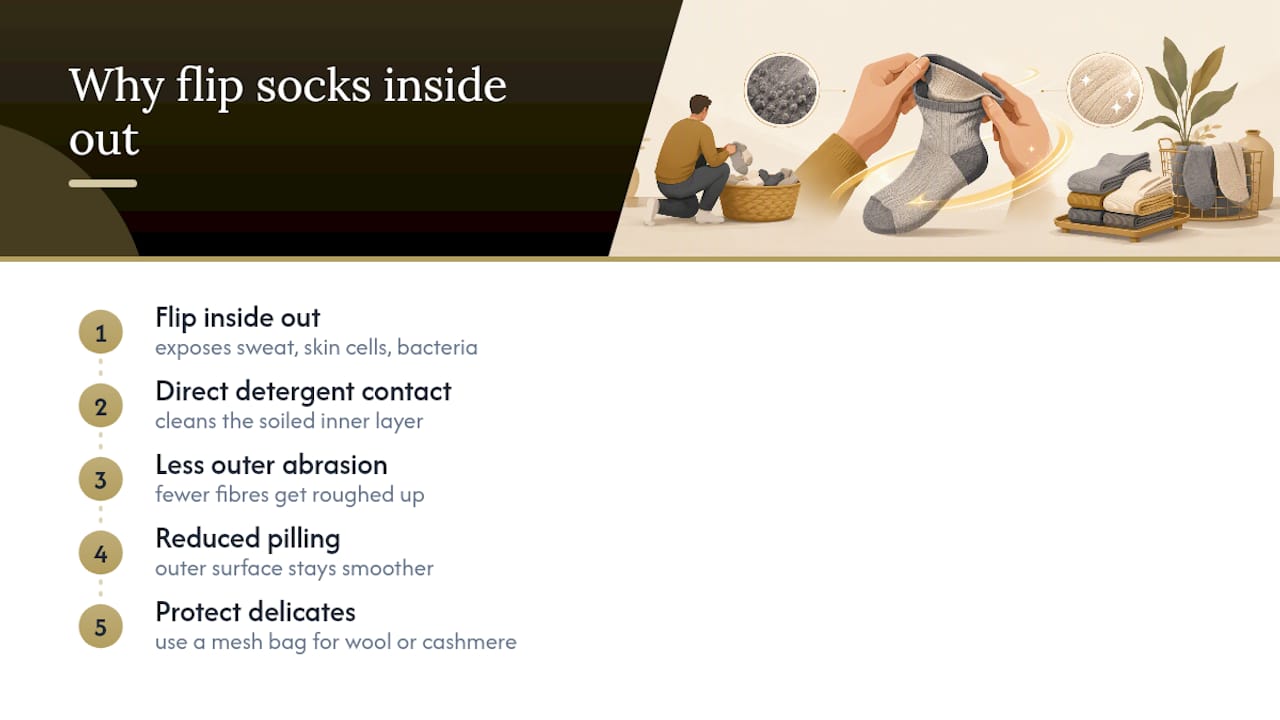
This single habit does more than most people realise. The inside of a sock holds the concentrated sweat, dead skin cells, and bacteria that build up against your foot all day. Washing right side out leaves that layer partially shielded by the outer fabric, so detergent and agitation focus on the visible exterior instead of where the grime actually lives.
Flipping socks inside out puts detergent directly against the soiled layer, which improves cleaning and reduces the abrasion that causes pilling on the outer surface. Fewer fibres get roughed up, and the sock looks newer for longer.
Pro Tip: Combine inside-out washing with a mesh bag for wool or cashmere pairs. You get the cleaning benefit without the extra friction that a full machine cycle can cause to delicate fibres.
What actually works, according to Amanda
People treat sock care as an afterthought until a favourite pair falls apart in six weeks. My own routine is boring, and that’s the point: inside out, cold wash, air-dry, and I rotate through eight or nine pairs so nothing gets worn into the ground. Half the socks I’ve ruined over the years went into a hot dryer because I couldn’t be bothered to hang them.
At Sock Geeks, that same thinking shapes how we source materials. Every pair, including our cashmere range, is made from ethically sourced fibres precisely because good material rewards good care, and cheap material punishes you for skipping it.
Want socks that need less babying?
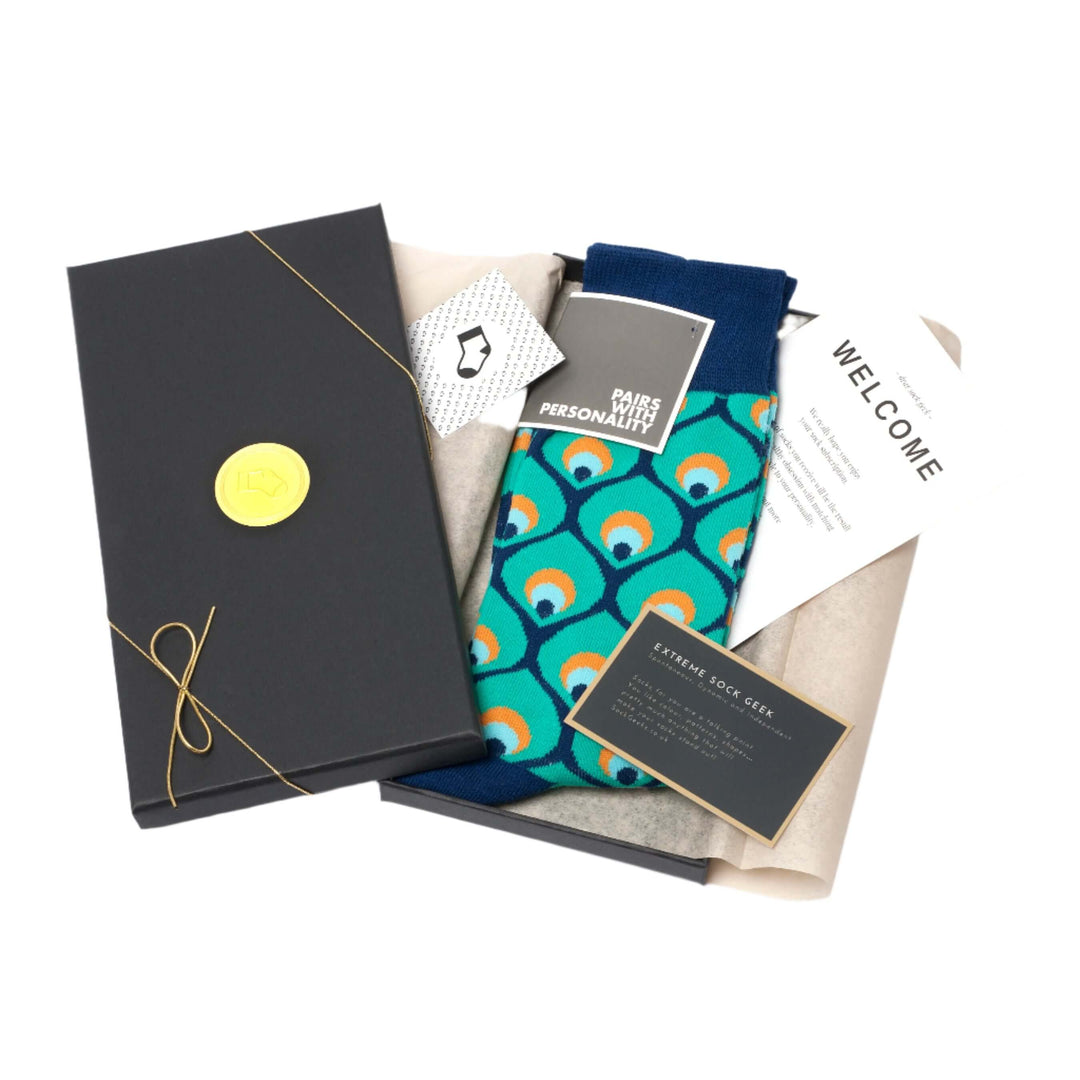
Some fibres simply ask less of you. A well-made merino or cashmere sock, properly sourced, holds its shape and resists odour with far less fuss than a bargain cotton blend that pills after three washes. Sock Geeks builds its entire range, from the personality-matched subscription boxes to the cashmere socks for ladies, around ethically sourced materials that are genuinely easier to look after long term.

If sorting fibres and reading care labels isn’t how you want to spend your evening, a curated subscription takes that decision off your plate entirely. Every box is matched to your personality quiz results, so you’re not stuck guessing whether a pair needs a wool wash or a standard cycle. It’s also worth a look if you’re planning ahead for a birthday, an anniversary, or a corporate order. Take the quiz on the Sock Geeks site and see what turns up in your first box.
Sources
- Should You Wash Socks Inside Out? Laundry Pros All Agree on This
- How to Care for Your Socks (So They Last Years, Not Months) | Novus Supply
- 3 Ways to Wash Socks - wikiHow
FAQ
What is the correct way to wash socks?
Turn them inside out, wash on a gentle cycle at a temperature matched to the fibre (30°C for wool, up to 40°C for cotton), and skip bleach and fabric softener.
Is it okay to wear the same socks for three days?
No, for daily wear socks should be washed after each use; low-activity dress socks can sometimes stretch to two or three wears if fully aired between uses, but ongoing sweat or skin issues call for a fresh pair every time.
What is the no-socks rule?
There’s no universal “no-socks rule” in laundry care; the phrase typically refers to footwear etiquette rather than a washing guideline, so it isn’t covered by sock care best practices.
Is it better to wash socks at 30 or 40 degrees?
It depends on the fibre: wool and cashmere should stay at 30°C or below to avoid felting, while cotton and synthetic blends tolerate 40°C without damage.






Leave a comment