





Sock durability explained
Sock durability is the ability of a sock to resist abrasion, retain its shape, and maintain comfort through repeated wear and wash cycles. Three metrics dominate lab reports and product claims:
- Abrasion resistance (measured in Martindale cycles): how many rub cycles a fabric withstands before surface breakdown
- Tensile and tear strength: the force required to stretch or rupture the knit structure
- Elastic recovery: how completely the cuff and body spring back after repeated stretching
Two qualifiers matter before going further. Durability is use-case dependent: a dress sock optimised for elegance will score differently on abrasion tests than a hiking sock built for trail punishment. And no single factor determines longevity. Material choice and construction work together, which is why a peer-reviewed study on modal and micromodal sock yarns found that both yarn selection and abrasion resistance are critical to maintaining quality across a product’s lifetime.
Key takeaways
Sock durability comes down to three measurable factors: abrasion resistance, tensile strength, and elastic recovery, all of which are shaped by fibre choice, yarn construction, and how you care for the sock.
| Point | Details |
|---|---|
| Three core metrics | Abrasion resistance (Martindale cycles), tensile strength, and elastic recovery determine how long a sock lasts. |
| Construction signals | Look for 170+ needle count, 10–20% polyamide in wear zones, and 4–5%+ elastane for reliable durability. |
| Care extends life | Washing at 30–40°C, air drying, and rotating through seven or more pairs preserves elastic recovery and fabric integrity. |
| Lab tests have limits | Martindale scores are comparative indicators, not direct predictors of service life; moisture, footwear, and wear frequency all modify real-world outcomes. |
| Sock Geeks | Curates socks using quality and construction criteria, with a 4.72 customer rating and ethically sourced materials across its subscription range. |
Table of Contents
- How laboratories measure sock durability
- What actually drives sock longevity: materials and construction
- Where socks typically fail and why
- Translating lab results into real-world lifespan
- How to assess durability before you buy
- Care and maintenance that genuinely extends sock life
- Typical lifespan by sock type and when to replace them
- Comparing sock materials: durability versus comfort
- A research-backed checklist for buying durable socks
- How sock thickness and knit density affect durability
- How moisture and friction during activity shorten sock life
- Durability requirements differ by how you use your socks
- Common manufacturing defects and how to spot them
- How to choose durable socks from UK brands
- The case for taking sock durability seriously
- Durable socks, curated for you by Sock Geeks
- Sources
- FAQ
How laboratories measure sock durability
The textile industry uses several standardised tests to quantify sock durability, and understanding what each measures helps you interpret product claims accurately.
Martindale abrasion test
The Martindale tester presses a fabric specimen against a standard abradant (typically wool or wire mesh) under a fixed load, moving it in a Lissajous figure-of-eight pattern. One complete figure-of-eight equals one cycle. Technicians count how many cycles pass before the fabric shows a defined level of surface breakdown: two thread breaks, a hole, or a specified change in appearance. Higher cycle counts mean greater abrasion resistance. For context, a lightweight dress sock fabric might reach 5,000–10,000 cycles before showing breakdown, while a reinforced athletic sock can exceed 20,000 cycles.
Tensile and tear tests
Tensile tests clamp a fabric strip and pull it apart at a controlled rate, recording the force at break. Tear tests measure resistance to propagating an existing cut. Both matter for socks because the knit structure experiences stretching every time you pull them on. Materials science research has quantified how fibre tensile strength, yarn twist, and knit density interact to determine abrasion resistance in knitted fabrics, confirming that these variables are not independent.
Elastic recovery protocols
Elastic recovery tests stretch a specimen to a fixed extension, hold it, then release and measure how much of the original length returns.
Limitations worth knowing
Lab tests isolate one stress at a time under controlled conditions. Specimens are conditioned at standard temperature and humidity before testing, which rarely matches the sweaty, dynamic environment inside a shoe. Peer-reviewed textile testing literature highlights that abrasion tests are directional, whereas real wear involves multi-directional shear. Pilling tests (which count surface fibre balls after tumbling) add another dimension but still do not replicate the combined compression, moisture, and friction of a full day’s walking.
| Test | What it measures | How to interpret the result |
|---|---|---|
| Martindale abrasion | Surface breakdown under rubbing | Higher cycles = greater abrasion resistance; compare within the same fabric weight |
| Tensile strength | Force to rupture the knit | Higher values indicate resistance to tearing when pulling on or stretching the sock |
| Elastic recovery | Cuff and body spring-back after stretch | Values below ~90% recovery suggest early sagging in wear |
| Pilling resistance | Surface fibre balling after agitation | Lower pilling grade (1–5 scale) means more surface degradation |
Key finding: A high Martindale cycle count indicates strong abrasion resistance under controlled conditions, but it does not directly predict resilience to the multi-directional shear inside a shoe during a full day’s activity.
What actually drives sock longevity: materials and construction
Fibre-level properties
Natural fibres and synthetics behave very differently under stress. Merino wool has natural crimp that gives it excellent elastic recovery, but its wet tensile strength drops compared to dry, making it vulnerable to abrasion when saturated. Long-staple cotton (Egyptian or Pima) produces smoother, stronger yarns than short-staple equivalents because fewer fibre ends protrude to catch and pill. Silk is strong for its weight but offers minimal abrasion resistance at the toe and heel. Polyamide (nylon) and polyester are the workhorses: both maintain tensile strength when wet, and polyamide in particular resists abrasion far better than most natural fibres, which is why it appears in reinforcement zones even in premium wool socks.
Research on yarn construction and durability confirms that ply, twist, and fibre type together determine pilling and abrasion outcomes for both hand-knitted and machine-knitted socks.
Yarn variables: twist, ply, and staple length
Tighter twist increases yarn cohesion and abrasion resistance but reduces softness. Higher ply (two-ply vs single-ply) adds bulk and strength. Longer staple fibres produce fewer surface ends, which directly reduces pilling.
Needle count, knit density, and reinforcement
Guidance from Gentleman’s Gazette notes that finer gauge machines using 170–240 needles produce denser, tighter knits that resist fraying and pilling better than coarser gauges. Higher needle count means more loops per inch, which distributes stress more evenly across the fabric. A hand-linked toe closure (where the toe seam is joined loop-by-loop on a machine) eliminates the bulky overlock seam that creates a pressure point and abrasion site inside the shoe.
Reinforcement zones work in two ways. An exoskeleton approach knits polyamide or nylon on the outside of high-wear areas, adding a hard-wearing surface layer. An endoskeleton approach uses internal cushion terry loops to absorb impact and friction from within. Both strategies address different failure modes and can be combined for heavy-duty applications, as materials science research documents.
Pro Tip: *When reading a spec sheet, look for the needle count and the percentage of polyamide.
Where socks typically fail and why
Most socks fail in predictable places, and the mechanical reason for each is distinct:
- Heel: The heel-strike zone experiences the highest abrasion load with every step. The fabric is compressed against the shoe interior and dragged across it repeatedly. Rough shoe linings accelerate this dramatically.
- Toe box: The toe area flexes with every step and rubs against the shoe’s toe cap. Bulky seams here create a pressure point that concentrates wear.
- Ball of the foot: High-impact zone for runners and anyone on their feet all day. Terry cushioning helps, but thin dress socks offer little protection.
- Cuff: Elastic creep is the main culprit. Repeated stretching without adequate elastane content or poor elastic integration causes the cuff to lose recovery and sag.
- Arch: Less common, but ill-fitting socks that bunch in the arch create localised friction points.
Activity and footwear matter as much as the sock itself. The Guardian’s consumer guidance specifically warns that rough shoe interiors and poor footwear fit accelerate wear, a point that no amount of reinforcement can fully compensate for.
Manufacturing defects also contribute. A bulky overlock toe seam, uneven knit tension, or inconsistent elastane integration can all create early failure points. In-store, run your thumb across the toe seam: it should be flat and barely perceptible. Hold the sock up to light and look for uneven stitch density, which appears as thin patches in the fabric.

Translating lab results into real-world lifespan
A Martindale cycle count does not convert cleanly into months of wear, but you can reason about it. Walking generates roughly 1,000–2,000 rub cycles per hour of moderate activity at the heel and toe zones, though this varies considerably with gait, footwear, and surface. A sock rated at 10,000 Martindale cycles might therefore withstand 5–10 hours of concentrated abrasion at that specific point before surface breakdown, but real wear distributes stress unevenly and involves moisture, temperature changes, and repeated washing, none of which the Martindale test replicates.
Perspective: Lab tests isolate one stress at a time. A sock that scores well on Martindale abrasion may still fail early at the cuff if elastic recovery is poor, or at the toe if the seam is bulky. No single test number captures the full picture.
The main modifiers that shift lab-to-life translation are:
- Wear frequency: A sock worn daily accumulates stress far faster than one worn twice a week.
- Footwear: Leather-lined shoes are gentler than synthetic linings with rough textures.
- Moisture: Wet fibres, particularly natural ones, lose tensile strength and abrade more easily.
- Washing: Each wash cycle adds mechanical stress. High temperatures and tumble drying compound this.
Peer-reviewed textile testing literature underlines that specimen preparation and directional abrasion in lab tests mean results should be treated as comparative indicators rather than absolute predictors of service life.
How to assess durability before you buy
Whether you are in a shop or scrolling a product page, a quick set of checks takes under a minute and tells you a great deal.
- Hold the sock up to light. Thin patches or uneven stitch density are visible as brighter spots. A sock that already shows light-leak at the toe or heel before it has been worn once will not last.
- Rub the fabric between your fingers. The Guardian advises feeling for yarn thickness and knit tightness this way. A dense, slightly resistant feel suggests a tighter knit; a loose, slippery feel suggests a lower gauge.
- Check the toe seam. Run your thumb across it. A hand-linked or flat-knit toe closure is barely raised; an overlock seam is a ridge you can feel clearly.
- Read the fibre label. Look for a polyamide or nylon percentage in the heel and toe (10–20% is a good signal). A sock that is 100% cotton with no synthetic reinforcement will wear faster.
- Find the needle count if listed. For dress socks, 170–200 needles indicates a fine, dense knit. Anything below 120 is a coarser construction.
- Check elastane percentage. A minimum of 4–5% elastane in the cuff and body supports elastic recovery. Less than that and the sock may sag after a few months.
- Look for explicit reinforcement claims. Descriptions like “reinforced heel and toe” or “cushioned sole” are meaningful when backed by fibre content data. Vague claims without supporting specs are less reliable.
For a deeper guide to spotting quality sock designs before purchase, the Sock Geeks buyer’s guide covers these checks in detail.
Care and maintenance that genuinely extends sock life
How you launder and store socks has a measurable impact on lifespan. The main variables are temperature, mechanical action, and drying method.
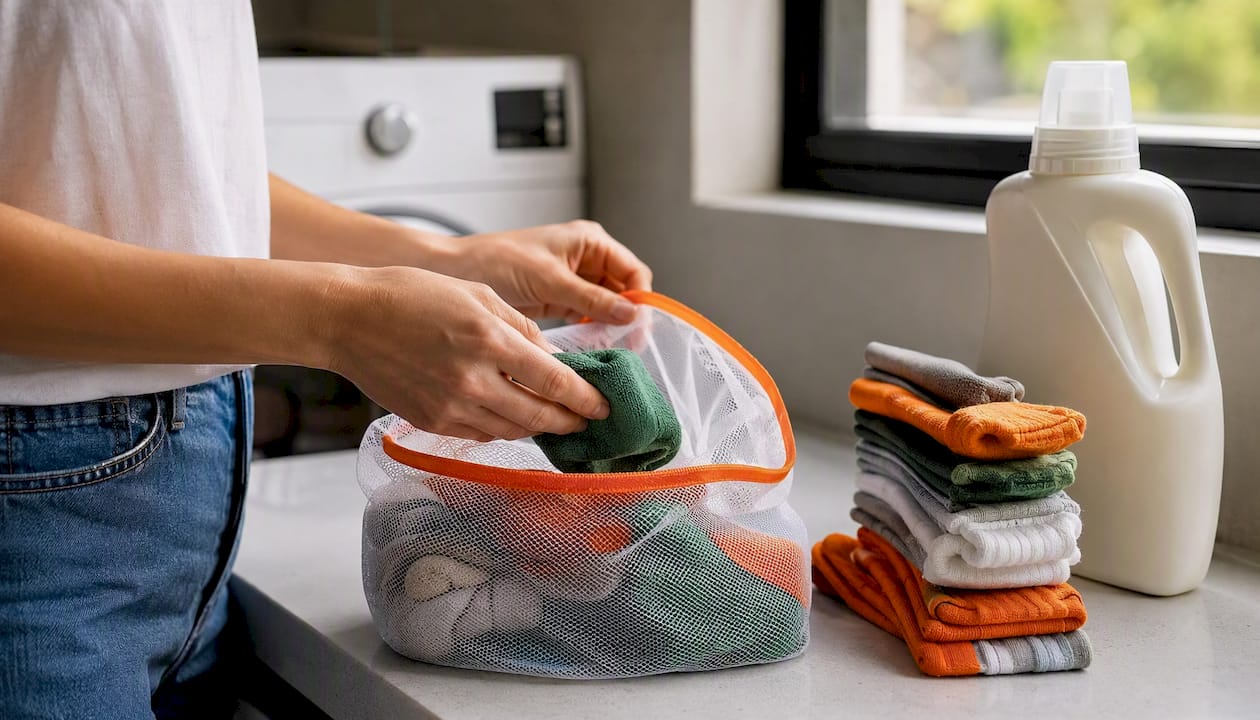
Washing: Turn socks inside out before washing. This exposes the surface that experiences the most friction during wear to the wash water, while protecting the outer face from abrasion against other garments. Use a pH-neutral detergent: alkaline detergents degrade wool and silk fibres over time. Wash at 30°C or below for wool and silk; cotton and synthetics tolerate 40°C. A gentle or delicates cycle reduces mechanical stress. Avoid washing socks with rough items like denim or towels.
Drying: Air drying is significantly gentler than tumble drying. High heat in a dryer degrades elastane, which is why cuffs lose their snap after repeated machine drying. If you must tumble dry, use the lowest heat setting. Never dry wool socks on a radiator: the concentrated heat causes fibre shrinkage and stiffening.
Rotation: Gentleman’s Gazette recommends rotating through a larger collection rather than wearing the same pairs repeatedly. Resting pairs between wears allows elastic fibres to recover fully, which preserves cuff memory over time. A rotation of seven or more pairs for daily wear is a practical target.
Storage: Store socks flat or loosely rolled, not folded tightly over themselves. Tight folding stresses the cuff elastic at a fixed point.
Repair: Darning a small hole at the heel or toe before it spreads is straightforward and extends a sock’s life considerably. A darning mushroom and matching yarn are the only tools needed. Once a hole exceeds roughly 2 cm in diameter, the surrounding fabric is usually too thin to hold a repair.
Pro Tip: Treat fine dress socks and robust hiking socks differently. Dress socks in merino or silk blends benefit from hand washing in cool water with a wool-specific detergent. Hiking socks in synthetic blends can handle a regular machine cycle, but still benefit from air drying to preserve elastane.
Typical lifespan by sock type and when to replace them
Lifespan varies considerably by use intensity, but some practical ranges hold across most contexts:
- Athletic socks (running, gym, hiking): 6–12 months with daily use, longer with rotation and proper care. High abrasion and moisture exposure accelerate wear.
- Casual everyday socks: 12–18 months with regular wear and correct laundering. Cotton-dominant construction at the lower end; merino or nylon-reinforced at the higher.
- Dress socks: 12–24 months, though fine-gauge dress socks worn daily may thin noticeably within a year. Rotation and gentle care push this toward the upper range.
- Work socks (construction, standing trades): 3–6 months under heavy daily use. These are consumables in demanding environments.
For more specific guidance on how often to replace socks, the Sock Geeks guide covers replacement timing by material and use pattern.
Clear replacement signals:
- The footbed has thinned to the point where you can see light through it when held up
- The heel or toe shows a hole or near-hole (visible thinning with no intact loops)
- The cuff no longer holds its position and slides down during wear
- The sock has permanently stretched and no longer fits snugly
- Persistent odour that survives washing (bacterial colonisation of degraded fibres)
Warranty claims rarely cover normal wear, but manufacturing defects (a seam that fails within the first few washes, elastic that breaks immediately) are a different matter. Most reputable UK retailers will replace a sock that fails within 30 days of purchase due to a clear construction fault.
Comparing sock materials: durability versus comfort
Different fibres make different tradeoffs, and understanding them helps you match material to purpose.
| Material | Durability strengths | Durability weaknesses | Best use |
|---|---|---|---|
| Merino wool | Excellent elastic recovery, natural crimp resists compression | Lower wet abrasion resistance; pills without nylon blend | Everyday, travel, light hiking |
| Long-staple cotton | Smooth yarn, low pilling, good tensile strength | Absorbs moisture, slow to dry, weakens when wet | Casual, dress, warm-weather wear |
| Silk | High dry tensile strength, smooth surface | Poor abrasion resistance; very low durability at wear points | Dress, liner socks only |
| Polyamide (nylon) | Outstanding abrasion resistance, retains strength when wet | Less breathable alone; usually blended | Reinforcement zones, athletic, hiking |
| Polyester blends | Good moisture management, holds shape well | Can feel synthetic; lower comfort ceiling | Athletic, outdoor, work socks |
| Technical fibres (e.g. Coolmax, Thermolite) | Engineered for specific performance (wicking, insulation) | Durability varies by construction; check specs | Specialist sport and outdoor use |
REI’s expert sock guidance reinforces that merino and synthetic blends each serve distinct activity profiles, and that liner sock systems (a thin synthetic liner under a thicker outer sock) can extend the life of both layers by reducing direct friction.
For heavy wear, favour polyamide-reinforced construction. For dress use, long-staple cotton or merino with a nylon heel and toe is the practical sweet spot. For a detailed ranking of dress sock fabric types, the Sock Geeks guide covers the tradeoffs in depth.
A research-backed checklist for buying durable socks
When comparing options at point of purchase, these are the checks that matter most:
- Needle count of 170+ for dress socks, 120+ for casual/athletic. Higher gauge means denser knit and better resistance to thinning.
- Polyamide or nylon in the heel and toe (10–20%). This is the single most reliable indicator of reinforced construction.
- Elastane of 4–5% or above. Below this threshold, cuff recovery degrades faster.
- Long-staple natural fibres if comfort matters. Egyptian cotton or Merino wool listed on the label signals better yarn quality than generic “cotton” or “wool.”
- Flat or hand-linked toe seam. Check physically or look for it called out in the product description.
- Wash-care compatibility with your habits. A sock that requires hand washing but you machine wash everything will degrade faster regardless of its construction.
- Credible warranty or quality guarantee. A brand confident in its construction will say so explicitly.
How sock thickness and knit density affect durability
Thickness and knit density are related but not identical. A thick sock can be loosely knitted (low density, high bulk) or tightly knitted (high density, high bulk). The tightly knitted version will almost always outlast the loose one because stress is distributed across more contact points per square centimetre.
Cushioned socks use terry loops on the inner face to add padding without increasing the outer knit density. These loops absorb impact and reduce the abrasion load on the outer fabric, which is why cushioned running socks often outlast thin dress socks despite being used in far more demanding conditions. The tradeoff is bulk: a heavily cushioned sock will not fit comfortably inside a slim dress shoe.
Knit density also affects moisture management. A denser knit wicks moisture more efficiently through capillary action, keeping the foot drier and reducing the wet-abrasion effect that degrades natural fibres faster than dry abrasion.
How moisture and friction during activity shorten sock life
Moisture is one of the most underappreciated factors in sock wear. Natural fibres, particularly wool and cotton, lose tensile strength when wet. A merino sock that performs well in dry conditions will abrade faster during a sweaty run or a wet hike. This is why polyamide blends dominate athletic sock construction: nylon retains its strength when wet.
Friction compounds the moisture effect. Inside a shoe, the sock experiences two friction surfaces simultaneously: the foot above and the shoe lining below. When moisture is present, the coefficient of friction between sock and shoe lining increases, meaning each step generates more abrasive force than in dry conditions. Moisture-wicking fibres and breathable shoe construction both reduce this effect.
Activity type determines the friction pattern. Running concentrates wear at the heel and ball of the foot. Cycling creates friction at the toe box and arch. Standing trades (construction, retail) generate sustained compression and low-level abrasion across the entire footbed. Each pattern calls for different reinforcement placement, which is why fabric choice for work socks differs from the priorities for running socks.
Durability requirements differ by how you use your socks
Not all socks face the same demands, and treating them as interchangeable is one of the fastest routes to early replacement.
Athletic socks need high abrasion resistance, moisture management, and cushioning. Lifespan is shorter than dress socks simply because the mechanical load is higher.
Casual everyday socks sit in the middle ground. The priority shifts toward comfort and wash durability: these socks go through the machine more frequently than dress socks.
Dress socks trade durability for elegance. Fine gauge, smooth yarns, and minimal bulk are the design priorities, which means thinner fabric and lower abrasion resistance. The mitigation is care: gentle washing, rotation, and avoiding rough shoe linings extend their life considerably.
Work socks for physically demanding jobs need the highest durability specification. Heavy cushioning, maximum polyamide content in wear zones, and robust elastic systems matter more than aesthetics. Expect to replace them more frequently than any other category, and factor that into cost-per-wear calculations.
Common manufacturing defects and how to spot them
Manufacturing defects are distinct from normal wear and often cause early failure. Knowing what to look for before purchase saves money and frustration.
Uneven knit tension shows as visible variation in stitch size across the fabric. Hold the sock flat and look along the length: the knit should be consistent. Thin patches indicate areas of lower loop density that will wear through first.
Bulky toe seams are the most common defect in budget socks. An overlock seam that sits proud of the fabric creates a pressure ridge inside the shoe. Over time, this concentrates abrasion at a single line rather than distributing it across the toe box.
Inconsistent elastane integration is harder to spot visually but shows up quickly in wear. A cuff that feels uneven in tension around its circumference, or that has visible ridges where the elastic thread has been fed unevenly, will lose recovery faster than a well-integrated cuff.
Loose or skipped stitches appear as small loops or gaps in the knit structure. Run your finger across the fabric: it should feel uniformly smooth. A loop that catches your fingernail is a weak point.
Colour bleeding or uneven dyeing is not a structural defect but can indicate lower-quality yarn processing, which sometimes correlates with weaker fibre preparation overall.
How to choose durable socks from UK brands
The UK market has several routes to genuinely durable socks. The most reliable approach is to look for brands that publish construction details rather than relying on marketing language alone.
When evaluating any UK sock brand, apply the same criteria the lab tests measure: fibre content with specific percentages, needle count where stated, and explicit reinforcement descriptions. One that says “premium quality, long-lasting comfort” is not.
Subscription services that curate socks based on quality criteria offer a practical shortcut for buyers who do not want to evaluate every pair individually. The key question to ask is whether the curation process applies technical criteria (fibre sourcing, construction standards) or simply aesthetic ones.
For professional contexts, why professionals prioritise quality socks comes down to cost-per-wear: a sock that lasts 24 months costs less per wearing than one that lasts six, even at a higher purchase price.
The case for taking sock durability seriously
Most people replace socks reactively: a hole appears, the cuff sags, and the pair goes in the bin. The technical framework in this article suggests a more deliberate approach is worth the effort, but there is a nuance the standard durability conversation tends to miss.
Durability and comfort are genuinely in tension at the fibre level. The fibres that resist abrasion best (polyamide, polyester) are not the ones that feel best against skin. The fibres that feel softest (merino, silk, cashmere) are the most vulnerable to wear. The socks that last longest in lab tests are not the ones most people actually want to wear all day.
The practical resolution is blending: a merino or long-staple cotton base for comfort, with polyamide reinforcement precisely where abrasion is highest. This is not a compromise so much as an engineering decision, and it is the reason why the fibre percentage breakdown on a label matters more than the headline material name.
The other underappreciated point is that care habits matter as much as construction, and a well-made sock laundered carelessly will fail faster than a modestly constructed sock treated gently. The elastic recovery data is particularly clear on this: tumble drying at high heat degrades elastane faster than almost any other single variable. Changing that one habit extends cuff life measurably.
Durable socks, curated for you by Sock Geeks
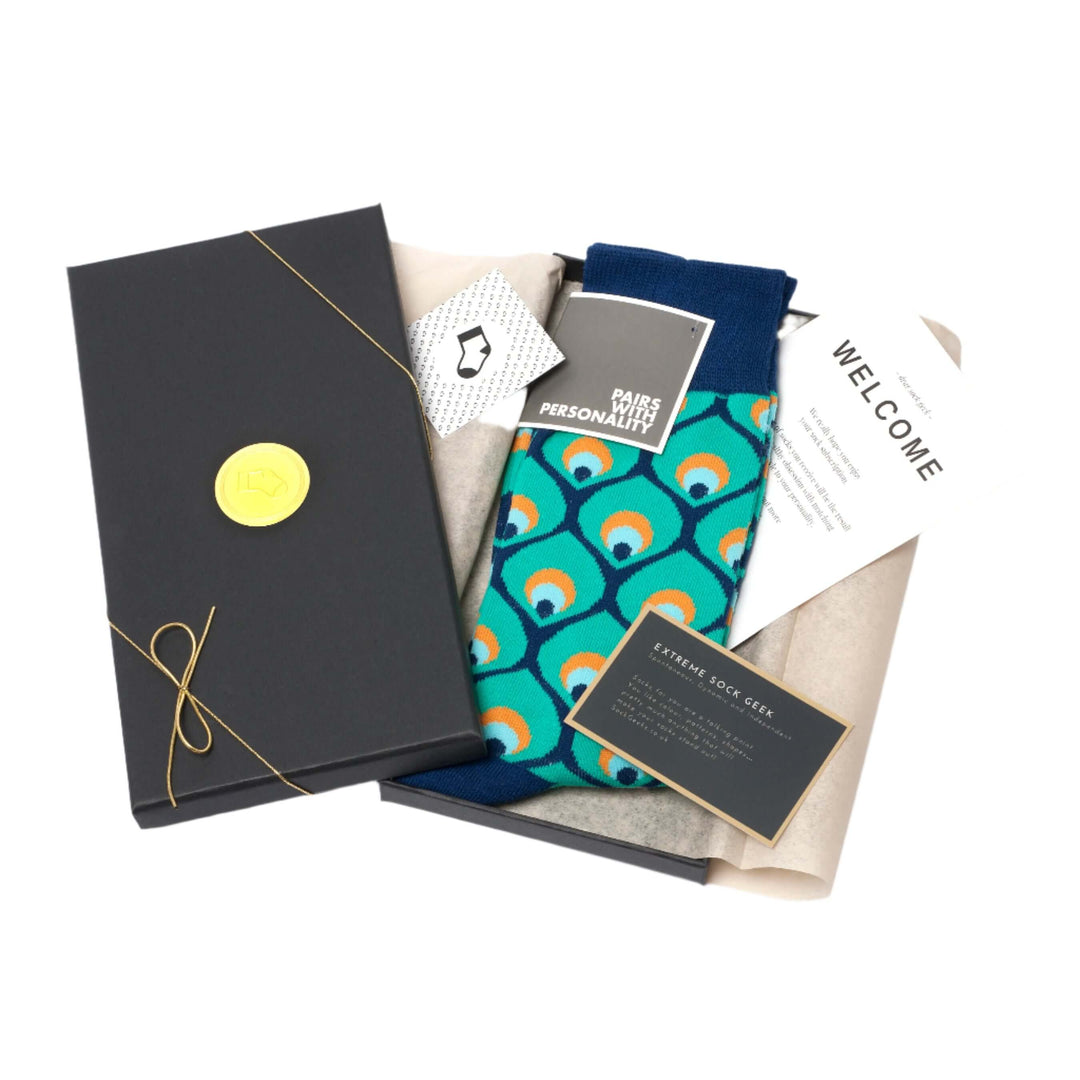
Knowing what makes a sock last is one thing. Finding pairs that actually meet those standards is another. Sock Geeks applies the technical criteria covered in this article when selecting every pair for its subscription boxes: fibre sourcing, construction quality, and reinforcement placement are all part of the curation process, not afterthoughts.

With a 4.72 customer rating and ethically sourced materials across the range, Sock Geeks offers a straightforward route to well-made socks without the need to evaluate every spec sheet yourself. The personality quiz matches you to styles and constructions that suit your wear pattern, whether that is everyday casual, professional, or something more expressive. Take the quiz and start your Sock Geeks subscription to receive quality-curated socks delivered to your door each month.
Sources
The following sources informed the technical content of this article and provide further reading for those interested in the underlying research and standards.
“Usage durability and comfort properties of socks made from differently spun modal and micro modal yarns” (PMC/NCBI) presents peer-reviewed findings on how yarn selection and abrasion resistance interact to determine sock quality across a product’s lifetime. Directly relevant to measurement methods and material choice. Read the study
- Usage durability and comfort properties of socks made from differently spun modal and micro modal yarns
- Materials (Basel) — relevant article DOI 10.3390/ma16041684
- PubMed article related to textile testing (indexed entry)
- How to make your dress socks last longer: 9 easy tips | Gentleman’s Gazette
- How to buy socks that last | The Guardian
FAQ
What makes a sock durable?
Durability depends on three factors working together: abrasion-resistant fibres (particularly polyamide in wear zones), a tight knit construction with a high needle count, and sufficient elastane for cuff recovery. Yarn quality, reinforcement placement, and care habits all contribute.
How many years should socks last?
Lifespan varies by use: athletic socks typically last 6–12 months with daily use, casual socks 12–18 months, and dress socks up to 24 months with proper care and rotation. Work socks in demanding trades may need replacing every 3–6 months.
What brand of socks lasts the longest?
No single brand dominates, but the reliable indicator is published construction detail: look for brands that specify needle count, polyamide percentage in reinforcement zones, and elastane content rather than relying on vague quality claims. Sock Geeks curates its range using these criteria, with ethically sourced materials and a 4.72 customer rating.
Why do socks wear out so fast now?
Fast-fashion sock production typically uses lower needle counts, shorter-staple fibres, and minimal polyamide reinforcement to reduce cost. Combined with high-temperature machine washing and tumble drying, which degrades elastane quickly, the result is a much shorter service life than well-constructed socks cared for correctly.






Leave a comment