






How to Wash Cashmere Socks Without Shrinking or Pilling
The safest way to keep cashmere socks soft and long-lasting is to hand wash in cool water, use a pH-neutral detergent, and dry them flat away from heat. Cashmere fibres are fine and loosely structured, which means heat and agitation are the two things that will destroy them fastest.
Quick rules to keep close:
- Hand wash where possible; machine wash only as a last resort
- Water temperature always low and never hot
- Use a wool or cashmere-specific detergent, never biological
- No wringing, no tumble drying, no direct heat
- Dry flat, reshape while damp
- Fold for storage; never hang
Pro Tip: Turn your cashmere socks inside out before washing. This single step protects the outer fibres from abrasion and is one of the most effective ways to slow pilling.
Table of Contents
- What should you check before washing cashmere socks?
- How do you hand wash cashmere socks step by step?
- When is it safe to machine wash cashmere socks?
- Which detergents are safe for cashmere socks?
- How should you dry and reshape cashmere socks?
- Why do cashmere socks pill, and how do you remove pills safely?
- How do you spot-clean a stain on cashmere socks?
- How should you store cashmere socks to prevent moth damage?
- How often should you wash cashmere socks, and how long do they last?
- What should you do if your cashmere socks shrink or felt?
- Sock Geeks’ recommended care routine
- Does water hardness affect how well cashmere washes?
- How do you prevent shrinkage beyond just controlling temperature?
- How do you revitalise cashmere socks that have lost their softness?
- Key takeaways
- Why the care label is only half the story
- Useful sources and further reading
- FAQ
What should you check before washing cashmere socks?
A few seconds of preparation prevents most of the damage that happens to cashmere in the wash.
Do:
- Check the care label, especially on blended fabrics
- Turn socks inside out to protect outer fibres
- Choose a wool or cashmere detergent
- Use cool or lukewarm water only
- Wash similar delicates together
Don’t:
- Use bleach, fabric softener, or biological detergents
- Use hot water or a standard machine cycle
- Scrub, wring, or rub the fabric
- Tumble dry or place near a radiator
Heel and toe areas are the most vulnerable parts of a cashmere sock. These zones carry the most friction during wear, so handle them with extra care when washing and reshaping. If your socks have reinforced toes, check the care label separately — blended reinforcement fibres sometimes tolerate slightly different conditions.
How do you hand wash cashmere socks step by step?
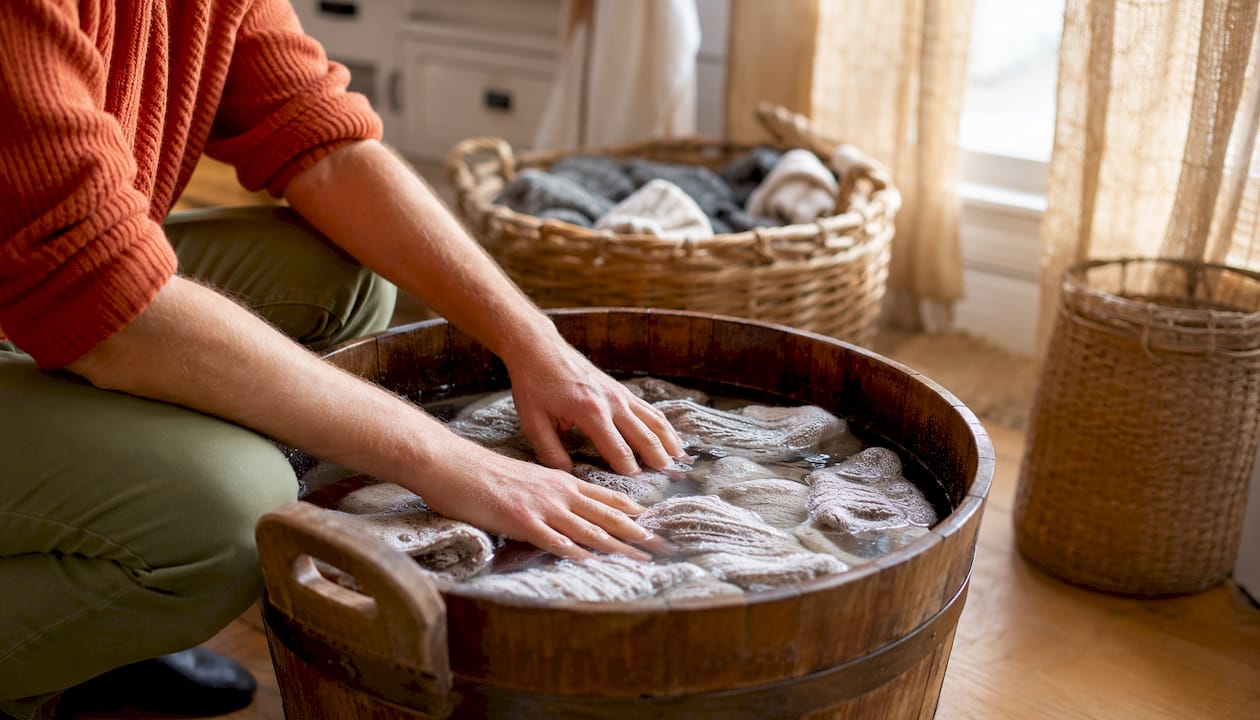
Hand washing is the gold standard for cashmere socks. Follow this sequence and you will rarely go wrong.
- Check for stains before wetting the sock. Treat any marks with a diluted wool detergent on a cotton pad first (see the spot-cleaning section below).
- Turn socks inside out and gather your supplies: wool or cashmere detergent, two clean towels, and a clean basin.
- Fill the basin with lukewarm water at or below 30°C. Add a small amount of detergent and swirl gently to dissolve.
- Submerge the socks and press them gently into the water. Do not rub or twist. A light squeeze every minute or so is all the agitation needed. Soak for 10–15 minutes maximum.
- Rinse carefully by draining the soapy water and refilling with clean water at the same temperature. Sudden temperature changes cause fibres to contract. Rinse until no detergent remains.
- Remove excess water by lifting the socks out and pressing them gently against the side of the basin. Never wring.
- Roll in a towel. Lay a clean dry towel flat, place the socks on top, and roll the towel up firmly. Press down to transfer moisture into the towel.
- Reshape and dry flat on a fresh dry towel or a flat drying rack, away from direct sunlight and radiators.
Pro Tip: Keep rinse water the same temperature as the wash water. Even a small temperature shock can trigger shrinkage in fine cashmere fibres.
When is it safe to machine wash cashmere socks?
Machine washing is acceptable for cashmere blends or when time is genuinely short, but it carries real risk for pure cashmere. The conditions have to be right.
When it may be acceptable:
- The care label explicitly permits machine washing
- The sock is a cashmere blend rather than 100% cashmere
- The item is heavily soiled and spot cleaning is insufficient
When to avoid it entirely:
- Pure cashmere with no machine-wash symbol on the label
- Socks that have already pilled or show signs of wear
- Any cycle that does not have a dedicated wool or delicate setting
If you do use a machine, these are the exact settings that reduce risk: wool or delicate cycle, maximum 30°C, low spin speed, and the shortest programme available. Always use a mesh laundry bag and wash only with other delicates. Remove the socks immediately when the cycle ends to prevent creasing.
Spin speed matters more than most people realise. Even a short burst of high-speed spin can felt cashmere fibres permanently. If your machine’s lowest spin setting still feels aggressive, skip the spin entirely and press water out by hand instead.
Which detergents are safe for cashmere socks?
The right detergent protects the natural oils in cashmere fibres; the wrong one strips them and accelerates pilling and roughness.
Use:
- pH-neutral wool or cashmere liquid detergents
- Soap flakes formulated for delicates
- Specialist hand-wash products labelled for wool or cashmere
Avoid:
- Biological detergents (the enzymes attack protein fibres)
- Bleach or any oxygen-based stain remover
- Fabric softeners, which coat fibres and reduce breathability
- Standard household washing-up liquid
Biological detergents and bleach strip the natural oils from cashmere, leaving fibres brittle and more prone to pilling. Even a single wash with the wrong product can cause noticeable deterioration.
When using a stain remover, always patch-test on an inside seam first and choose a product specifically labelled safe for wool.
| Method | Water temperature | Detergent type | Notes |
|---|---|---|---|
| Hand wash | cool or lukewarm water | Wool/cashmere liquid or soap flakes | Preferred method |
| Machine wash | cool or lukewarm water | Wool/cashmere liquid | Delicate/wool cycle, mesh bag, low spin |
| Spot clean | Cold | Diluted wool detergent | Blot only; patch-test first |
Pro Tip: Use less detergent than you think you need. A teaspoon is usually enough for a single pair. Excess product is harder to rinse out and leaves residue that stiffens fibres over time.
How should you dry and reshape cashmere socks?
Getting moisture out without stretching or felting the fibres is where most people go wrong.
- After the towel roll, unroll carefully and lift the socks by supporting the whole sock, not just one end.
- Lay them flat on a dry towel or a mesh drying rack. Never drape over a radiator, hang from a line, or place in direct sunlight.
- While the socks are still damp, gently ease them back to their original shape with your hands. Smooth out any folds or bunching around the heel and toe.
- Leave to air dry completely before storing or wearing. This usually takes several hours in a well-ventilated room.
Tumble drying is the single fastest way to ruin cashmere socks. The heat causes fibres to felt and shrink, often permanently. Hanging them to dry stretches the fabric under its own weight. Flat drying on a towel-roll method is the only approach that preserves both shape and loft.

Why do cashmere socks pill, and how do you remove pills safely?
Pilling is caused by short fibres working loose through friction and tangling into small balls on the surface. It is most common at the heel, ball of the foot, and around the ankle where the sock meets a shoe. It does not mean the sock is poor quality; it means it is being worn.
Safe removal tools:
- A cashmere comb, drawn gently across the surface in one direction
- A fabric shaver on its lowest setting, tested on an inside seam first
- Fingers, for very small pills, by rolling them off rather than pulling
What to avoid:
- Pulling pills sharply, which can tear the weave
- Using a standard lint roller, which catches and stretches fibres
- Shaving too frequently or with heavy pressure
Rotating your socks so no single pair is worn every day reduces friction build-up significantly. Washing inside out also helps, as does avoiding rough shoe linings.
Pro Tip: De-pill before washing, not after. Wet fibres are more fragile, and running a comb or shaver over damp cashmere risks pulling threads. A quick once-over when the socks are dry and aired takes thirty seconds and keeps them looking fresh.
How do you spot-clean a stain on cashmere socks?
Spot cleaning is preferable to a full wash whenever possible. It reduces the number of full washes the sock goes through, which directly extends its life.
- Act quickly. Blot the stain with a clean, dry cloth to absorb as much of the substance as possible. Do not rub.
- Mix a small amount of wool detergent with cold water until diluted.
- Patch-test the solution on an inconspicuous area, such as the inside of the cuff, and wait a minute to check for colour change or fibre reaction.
- Apply the solution to the stain using a clean cotton pad or soft cloth. Press gently and blot; do not scrub.
- Rinse the area with a clean damp cloth, again blotting rather than rubbing.
- Reshape and dry flat. If the stain persists after drying, escalate to a full hand wash.
Rubbing a stain spreads it and forces it deeper into the fibre. Blotting lifts the substance out. This is the single most important technique to get right when treating cashmere, and it applies to every stain type from red wine to mud.
Avoid heat when treating stains. Hot water sets protein-based stains such as blood or dairy, making them nearly impossible to remove.
How should you store cashmere socks to prevent moth damage?
Storage is where a lot of cashmere damage happens quietly, especially in the UK where damp, cool conditions create ideal conditions for moths.
Core storage rules:
- Always wash cashmere before long-term storage; moths are attracted to body oils and food residue
- Fold rather than hang; hanging distorts the shape over time
- Use breathable cotton bags, fabric-lined boxes, or drawer dividers rather than sealed plastic bags
- Add cedar blocks or lavender sachets to deter moths; replace or refresh them every few months
- Air stored cashmere every few weeks during damp seasons
In the UK, the risk of moth damage peaks in spring and early summer when clothes moth larvae are most active. A quick inspection of stored cashmere in March and again in September catches problems early. Cedar loses its potency over time, so sand the surface lightly to refresh it or replace blocks annually.
Pro Tip: If you are storing cashmere socks as part of a gift set, keep them in their original packaging or a breathable cotton pouch rather than a sealed box. This prevents moisture build-up and keeps them fresh for the recipient.
How often should you wash cashmere socks, and how long do they last?
Cashmere does not need washing after every wear. Airing between wears and spot cleaning where possible is the better default.
Washing frequency by use:
- Daily wear: wash every 3–5 wears, or sooner if visibly soiled
- Occasional wear: wash every 3–5 wears, or at the end of a season
- After storage: always wash before wearing again after long-term storage
With proper care, quality cashmere socks can last several years. The factors that shorten lifespan most quickly are frequent machine washing, tumble drying, and wearing the same pair every day without rotation. Rotating between two or three pairs and following the hand-wash routine consistently makes a significant difference to how long they hold their softness and shape. For guidance on when a pair has genuinely reached the end of its useful life, Sock Geeks’ guide on when to replace socks covers the signs clearly.
What should you do if your cashmere socks shrink or felt?
First, work out what you are dealing with. Misshapen socks that have simply lost their form during drying can often be coaxed back to shape. Felted socks, where the fibres have matted together into a dense, stiff fabric, are a different problem entirely.
- Assess the damage. If the sock still feels soft and the fibres are distinct, it is likely misshapen rather than felted. If it feels dense, stiff, and the surface looks matted, felting has occurred.
- For misshapen socks: soak briefly in lukewarm water with a drop of hair conditioner or wool wash, then gently stretch the sock back to its original dimensions while wet. Lay flat to dry.
- For light felting: gentle steaming can relax fibres enough to allow some reshaping. Hold a garment steamer or the steam setting of an iron several centimetres above the surface; do not press down. Ease the fabric gently while warm.
- Know the limits. Severe felting is largely irreversible. Attempting to force heavily felted cashmere back to shape risks tearing the fabric. At that point, replacement is the honest answer.
Felting happens in seconds, not minutes. A single hot wash or a brief tumble-dry cycle is enough to cause permanent damage. Prevention is the only reliable strategy.
Sock Geeks’ recommended care routine
A short, consistent routine does more for cashmere longevity than occasional deep care. This is the approach Sock Geeks recommends for anyone who wears or gifts premium cashmere socks.

Weekly:
- Air socks after each wear rather than returning them directly to a drawer
- Spot clean any marks immediately rather than waiting for a full wash
- Rotate between pairs to reduce wear on any single sock
Every 3–5 wears:
- Hand wash using the step-by-step method above
- Reshape and dry flat; never tumble dry
Monthly:
- Check for pilling and de-pill gently with a cashmere comb before washing
- Inspect storage for moth activity and refresh cedar or lavender
Seasonally:
- Wash all cashmere before putting it away for the warmer months
- Store in breathable cotton bags with fresh cedar blocks
Sock Geeks’ luxury cashmere socks are designed to reward exactly this kind of care. The fibres hold their softness well when the routine is consistent.
Pro Tip: Keep a small mesh laundry bag and a travel-size wool detergent together in one place. When washing is convenient, you will actually do it correctly rather than cutting corners.
Does water hardness affect how well cashmere washes?
Hard water, which is common across much of England, contains dissolved minerals that can interfere with detergent performance and leave a slight residue on delicate fibres. Over time, this can make cashmere feel slightly stiffer or less soft than it should.
If you live in a hard-water area, using a slightly larger amount of wool detergent compensates for the reduced lathering. Alternatively, adding a small amount of white vinegar to the final rinse water helps neutralise mineral deposits without harming the fibres. Filtered or bottled water is an option for those who notice persistent stiffness despite correct washing technique, though it is rarely necessary for most UK households.
How do you prevent shrinkage beyond just controlling temperature?
Temperature is the most obvious lever, but it is not the only one. Soak time, mechanical action, and how you handle wet cashmere all contribute to shrinkage risk.
Keep soaks short: 10–15 minutes is enough to clean the fibres without over-relaxing them. Prolonged soaking causes fibres to swell and become more vulnerable to distortion when handled. When lifting wet cashmere from the basin, support the whole sock rather than holding it from one end, as the weight of the water pulls on unsupported fibres. Avoid any sudden movement or squeezing during the rinse. The gentler the handling throughout, the less the fibres shift from their original position. For further guidance on caring for other delicate knit items using similar principles, this guide on cleaning beanies without shrinking covers the same core logic well.
How do you revitalise cashmere socks that have lost their softness?
Cashmere that has gone slightly rough or flat can often be brought back with a few targeted steps. A short soak in lukewarm water with a small amount of hair conditioner (a product designed for fine protein fibres, just like cashmere) can restore suppleness. Leave for five minutes, rinse gently in water at the same temperature, and dry flat as normal.
Light steaming is the other reliable option. A garment steamer held a few centimetres above the surface relaxes compressed fibres and restores some of the original loft. This works particularly well after socks have been stored flat for a long season. What it cannot do is reverse felting or repair fibres that have broken from repeated harsh washing. Revitalisation works on tired cashmere; it does not work on damaged cashmere.
Key takeaways
Proper cashmere sock care comes down to three non-negotiable habits: cool water, minimal agitation, and flat drying.
| Point | Details |
|---|---|
| Temperature is critical | Always wash at or below 30°C; even slightly hot water accelerates shrinkage and pilling. |
| Hand washing preserves softness | A 10–15 minute gentle soak in wool detergent is the safest and most effective method. |
| Flat drying protects shape | Towel-roll to remove moisture, then reshape and dry flat away from all heat sources. |
| Storage prevents moth damage | Fold into breathable cotton bags with cedar or lavender; always wash before long-term storage. |
| Frequency matters less than method | Washing every 3–5 wears and airing between uses extends lifespan more than frequent full washes. |
Why the care label is only half the story
Most people follow the care label and assume that covers it. It does not. A label that says “hand wash 30°C” tells you the minimum safe condition; it says nothing about soak time, detergent chemistry, how to handle wet fibres, or the cumulative effect of hard water over a season.
The part of cashmere care that actually separates socks that last three years from socks that felt after six months is the handling: how you lift them from the water, whether you reshape while damp or leave them to dry in a heap, whether you de-pill before washing or after. These are the details that manufacturer labels never spell out because they assume a level of knowledge most buyers simply do not have.
Gifting cashmere socks is a generous thing to do. Passing on the care knowledge alongside them is what makes the gift last.
Useful sources and further reading
- Cashmere Socks Care Guide by Pantherella - manufacturer guidance from one of the UK’s most respected hosiery makers
- Cashmere Socks: A Care Guide by Corgi Socks - practical care notes from a heritage British sock brand
- How to maintain cashmere: socks and sweaters - broader cashmere knitwear care guidance
- All about cashmere socks - Sock Geeks’ own guide to cashmere materials and construction
- How to wash wool socks - Sock Geeks’ companion guide for wool and delicate sock care
- Laundry bags and sock care - guidance on using mesh bags to protect delicates in the machine
FAQ
How do you care for cashmere socks properly?
Hand wash in lukewarm water at or below 30°C using a pH-neutral wool or cashmere detergent, soak for 10–15 minutes with minimal agitation, then towel-roll to remove moisture and dry flat away from direct heat.
How do you stop cashmere socks from pilling?
Wash inside out, rotate pairs to reduce daily friction, and use a cashmere comb or low-pressure fabric shaver to remove pills gently before washing. Avoid biological detergents, which weaken fibres and accelerate pilling.
How long do cashmere socks last with proper care?
Quality cashmere socks can last several years with consistent hand washing, flat drying, and correct storage. The lifespan shortens significantly with tumble drying, frequent machine washing, or wearing the same pair every day without rotation.
Are 100% cashmere socks worth the extra care?
Yes. Pure cashmere offers exceptional softness and warmth that blended alternatives do not fully replicate, and the care routine, once established, takes only a few minutes per wash. The investment in care pays back in years of wear.









Leave a comment