






Work socks are specialised hosiery designed to protect and support feet during extended professional use, and knowing how to choose work socks correctly can prevent blisters, fatigue, and fungal infections across an entire shift. The right pair manages moisture, absorbs impact, and fits your boot without bunching. Get it wrong and you will feel it by lunchtime. This guide covers materials, cushioning, fit, height, and care so you can make a confident, informed choice for any job environment.
What materials are best for work socks?
The fibre your sock is made from determines almost everything: how dry your foot stays, how long the sock lasts, and how it performs in heat or cold. For 8-to-12-hour shifts, moisture-wicking synthetic or merino wool blends outperform 100% cotton by reducing sweat retention and blister risk. Cotton absorbs sweat and holds it against the skin. That trapped moisture raises the risk of fungal growth and causes the friction that leads to blisters.
Merino wool is the standout natural fibre for work socks. It absorbs up to 30% of its weight in moisture while maintaining breathability and natural odour resistance. That makes it ideal for variable environments where temperature shifts throughout the day. Synthetic blends, typically nylon or polyester combined with elastane, offer faster moisture transfer and greater durability under repeated washing. Understanding why fabric matters in work socks helps you match the fibre to your specific job conditions.
Here is how the main fibre types compare:
- Merino wool blends: Temperature regulating, naturally odour resistant, soft against skin, and moisture wicking. Best for variable or cold environments.
- Synthetic blends (nylon/polyester): Fast drying, highly durable, and excellent at moving sweat away from the skin. Best for hot or high-sweat environments.
- Cotton: Comfortable initially but retains moisture, loses shape quickly, and increases blister risk during long shifts. Avoid for all-day wear.
- Bamboo blends: Naturally antibacterial and soft, with moderate moisture management. A reasonable choice for light-duty or office-based roles.
Pro Tip: Check the fibre composition label before buying. A blend of at least 60% merino wool or synthetic with elastane for stretch will outperform a pure cotton sock in almost every professional setting.
How does cushioning affect comfort during long shifts?
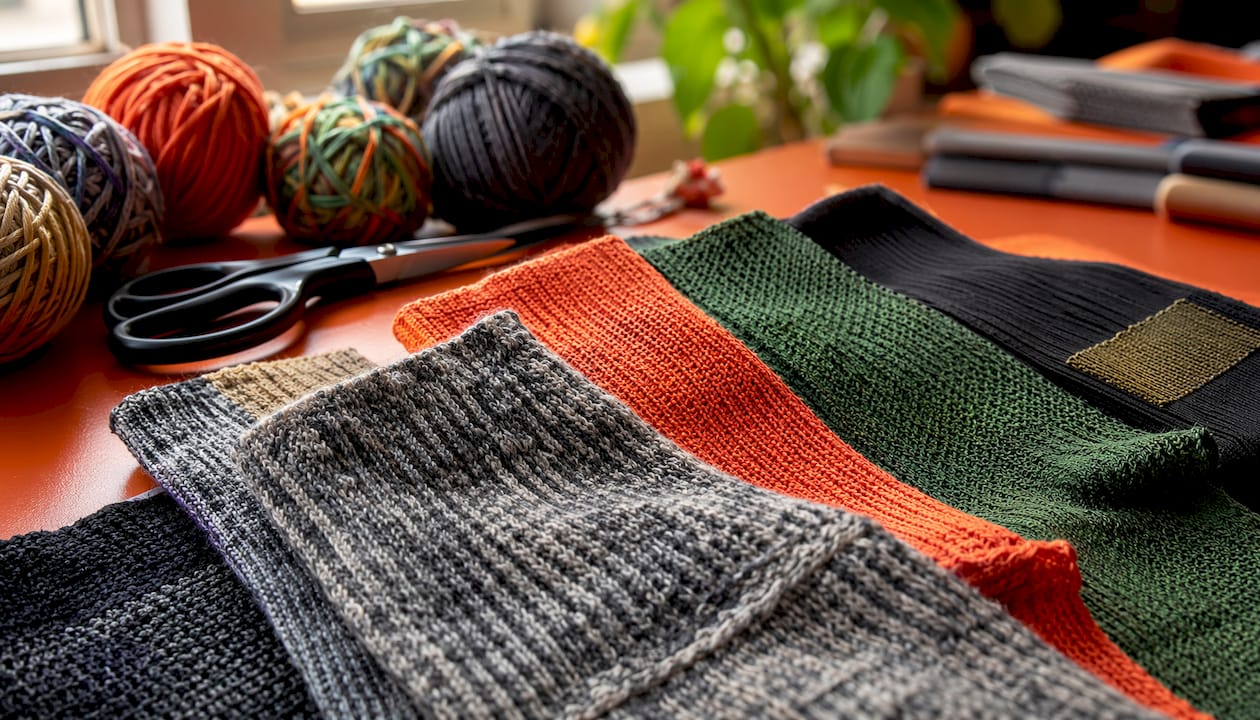
Cushioning placement matters more than cushioning volume. Zone-specific cushioning at the heel, toe, and arch absorbs impact more efficiently than uniform thickness across the whole sock. Workers standing on concrete floors for eight hours need targeted padding where the foot strikes hardest, not a thick sock that adds bulk everywhere. That bulk creates its own problems.
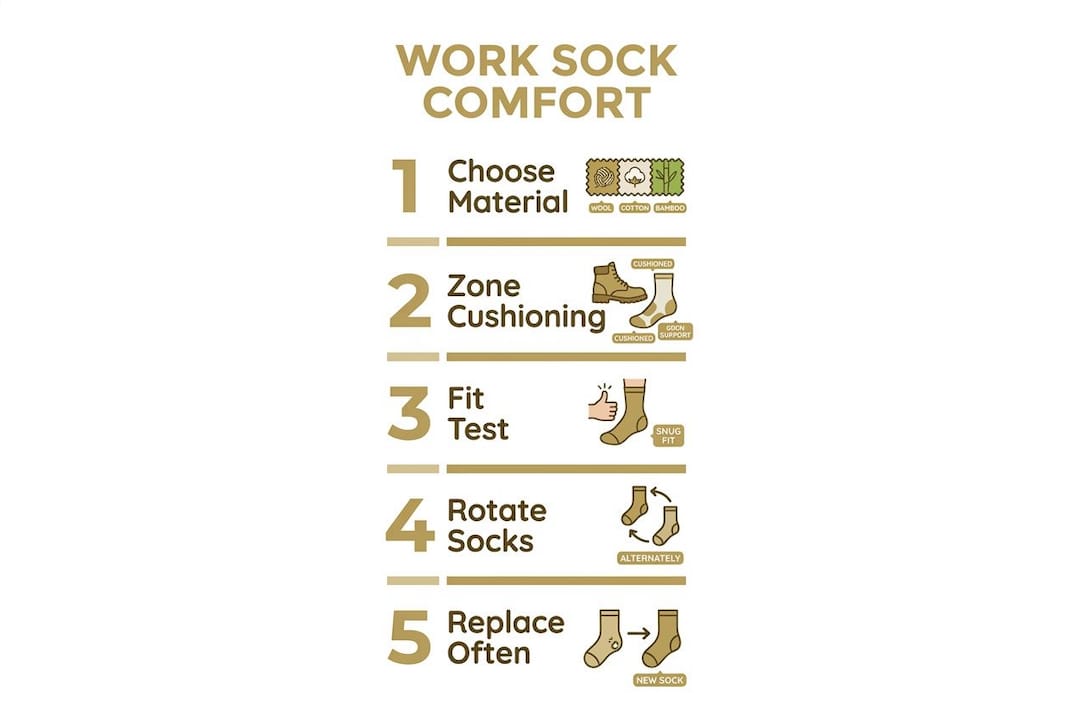
Thick cushioning can make tight boots uncomfortable by creating pressure points. Thinner, moisture-wicking socks are often preferable with snug footwear, even if they offer less padding. The goal is to balance protection with fit. A sock that compresses your foot inside a steel-toe boot causes more harm than a thinner sock worn with a well-fitted boot.
Arch support is a feature many buyers overlook. High-quality arch support in socks promotes proper foot alignment and weight distribution, reducing posture-related fatigue over extended work hours. Light arch compression also holds the sock in place, preventing it from sliding down inside the boot. Seamless toe construction significantly reduces blisters caused by pressure points common with standard seams. Standard seams create high-pressure ridges that rub against the toe box with every step.
Key cushioning features to look for:
- Reinforced heel and toe zones for impact absorption and durability
- Arch compression band to maintain sock position and support alignment
- Seamless toe construction to eliminate seam-related friction
- Medium-weight cushioning for most work boots, light cushioning for snug-fitting footwear
Pro Tip: Try your work socks on with your actual boots before committing to a full pack. A sock that feels perfect in your hand may compress into a pressure point inside a steel-toe cap.
What sock height and fit should you choose for work?
Sock height is not just a style decision. It directly affects protection, comfort, and compatibility with your footwear. The three standard heights for work socks are ankle, crew (mid-calf), and over-the-calf. Each suits different boot and shoe types.
Crew height is the standard choice for most work boots. It sits at mid-calf, covering the boot shaft and preventing debris from entering the top of the boot. It also stops the boot collar from rubbing directly against bare skin, which is a common cause of irritation during long shifts. Ankle socks work well with low-cut trainers or safety shoes but offer no protection against boot-collar chafing. Over-the-calf socks provide maximum coverage and stay up without slipping, making them the best option for tall boots or jobs that involve kneeling and crouching.
| Sock height | Best for | Key benefit |
|---|---|---|
| Ankle | Low-cut safety shoes, trainers | Lightweight, minimal bulk |
| Crew (mid-calf) | Standard work boots | Prevents chafing, blocks debris |
| Over-the-calf | Tall boots, active roles | Stays up, maximum coverage |
Proper fit prevents sock bunching or sliding, which causes friction and blisters. A correctly fitted sock sits smoothly with no wrinkles or thin pulling at the toe or cuff. Always size by shoe size rather than a generic small, medium, or large label. Manufacturers vary, so check the size chart. A sock that is too large will fold and bunch. A sock that is too small will pull tight across the toe box and restrict circulation.
Pro Tip: If you are between sizes, size up rather than down. A slightly larger sock can be pulled smooth. A sock that is too small cannot be stretched without damaging the fibre.
How should you care for and rotate work socks?
Rotation is the most underrated factor in work sock performance. Rotating at least six pairs of work socks is critical to prevent moisture buildup, odour, and fungal infections. Wearing the same pair on consecutive days, even after washing, does not allow the fibres to fully recover their shape and cushioning. Six pairs gives you a full working week with a spare.
- Wash after every wear. Sweat and bacteria degrade fibres quickly. Washing after each shift preserves cushioning and prevents odour.
- Use a gentle cycle and cold water. High heat shrinks wool and breaks down elastane. Cold water washing extends sock life significantly.
- Air dry rather than tumble dry. Heat from a dryer compresses cushioning and weakens the elastic. Lay socks flat or hang them to dry naturally.
- Inspect regularly for wear. Thinning cushioning, stretched elastic, or seam wear are clear signs a pair needs replacing. Worn socks offer no protection.
- Store flat or loosely rolled. Folding socks tightly over themselves stretches the cuff elastic. Loose storage preserves the band’s tension.
Reinforced heels and toes increase durability and lifespan, especially in demanding conditions. Extra stitching in high-friction zones prevents premature wear and maintains cushioning where you need it most. Buying socks with reinforced zones and caring for them properly means you replace them far less often, which is both economical and better for the environment.
Pro Tip: Label your sock pairs by week of purchase. Rotating through them in order distributes wear evenly and tells you exactly when each pair is due for replacement.
How do you pick work socks for specific job environments?
Different jobs place different demands on socks. A healthcare worker standing on smooth hospital floors for twelve hours needs different features from a construction worker on uneven ground in steel-toe boots. Matching sock features to your specific work conditions is the final step in a good work sock buying guide.
For jobs in cold storage or outdoor winter environments, merino wool blends provide the best temperature regulation. For hot kitchens or outdoor summer work, lightweight synthetic blends with maximum moisture transfer keep feet cooler. Workers in retail or healthcare who spend hours on hard floors benefit most from graduated compression between 15–30 mmHg, which aids circulation and reduces leg swelling without requiring a medical prescription.
Key considerations by job type:
- Construction and heavy industry: Reinforced heel and toe, medium to heavy cushioning, crew or over-the-calf height, merino or synthetic blend.
- Retail and healthcare: Light to medium cushioning, compression band, moisture-wicking synthetic, crew height for trainer or low boot compatibility.
- Cold storage or outdoor winter roles: Merino wool blend, medium cushioning, over-the-calf height for warmth and coverage.
- Hot environments (kitchens, outdoor summer): Lightweight synthetic, minimal cushioning, maximum breathability, ankle or crew height.
- Office or light-duty roles: Bamboo or cotton blend acceptable, light cushioning, crew or ankle height based on footwear.
For retail workers specifically, expert guidance on working in intensive retail environments highlights moisture management and cushioning as the two features that most directly affect end-of-shift comfort. The moisture-wicking sock guide from Sock Geeks covers the technology behind these fabrics in practical detail.
Key takeaways
The single most effective approach to choosing work socks is to prioritise moisture-wicking fibres, zone-specific cushioning, correct sizing, and a sock height matched to your boot and job demands.
| Point | Details |
|---|---|
| Fibre choice is foundational | Merino wool and synthetic blends outperform cotton for all-day moisture management and durability. |
| Cushioning placement beats volume | Zone-specific padding at heel, toe, and arch reduces fatigue without creating pressure points in tight boots. |
| Fit prevents blisters | Size by shoe size, not generic labels, and choose a sock that sits smooth with no bunching or pulling. |
| Height protects and prevents chafing | Crew height suits most work boots; over-the-calf is best for tall boots or active roles. |
| Rotation of six pairs is the minimum | Daily rotation keeps feet dry, prevents fungal issues, and allows fibres to recover between wears. |
What I have learned from years of watching people get socks wrong
Most people treat work socks as an afterthought. They buy a multipack of cotton socks, wear them until they fall apart, and then wonder why their feet ache by mid-afternoon. The research from 2026 confirms what experienced footwear professionals have known for years: the sock is the interface between your foot and your boot, and it matters enormously.
The most common mistake I see is buying thick cushioned socks without trying them inside the actual work boot. A sock that feels luxurious in your hand can turn a well-fitted boot into a vice. The second most common mistake is skipping rotation. Wearing a damp sock two days in a row, even a good one, undoes all the benefits of quality fibre and construction.
My honest recommendation is to invest in six pairs of a merino or synthetic blend, sized correctly, with seamless toes and arch compression. Wear them in rotation, wash them cold, and air dry them. You will replace them far less often than cheap cotton socks, and your feet will feel the difference by the end of the first week. If you are unsure where to start, the guide to picking socks for long work days from Sock Geeks is a practical starting point grounded in current fibre research.
The uncomfortable truth is that most foot pain at work is preventable. The sock is rarely the first thing people examine, but it is almost always part of the problem.
Sock Geeks: quality work socks built for long shifts
Sock Geeks specialises in premium, ethically sourced socks designed for people who spend serious time on their feet. Every pair is made from high-quality materials chosen for moisture management, durability, and comfort across long working days.

Sock Geeks offers multi-pair packs ideal for daily rotation, so you can maintain the six-pair minimum that foot health experts recommend without compromising on quality. The collections include moisture-wicking blends and cushioned options suited to construction, retail, healthcare, and office environments. Each pair is curated with the same attention to detail that has earned Sock Geeks a 4.72 customer rating across thousands of reviews. Visit the Sock Geeks homepage to find the right work sock for your job and build a rotation that actually protects your feet.
FAQ
What are the best socks for work on hard floors?
Socks with zone-specific cushioning at the heel and toe, combined with arch compression and seamless toe construction, are the best choice for hard floor environments. Merino wool or synthetic blends provide the moisture management needed for all-day comfort.
How many pairs of work socks do I need?
A minimum rotation of six pairs is recommended to prevent moisture buildup, odour, and fungal infections. Wearing a fresh pair every day and washing after each shift keeps feet dry and socks performing at their best.
Is merino wool or synthetic better for work socks?
Merino wool is better for variable temperatures and odour resistance, while synthetic blends dry faster and suit high-sweat or hot environments. Both outperform cotton for all-day professional use.
What sock height is best for work boots?
Crew height, which sits at mid-calf, is the standard recommendation for most work boots. It prevents boot-collar chafing and stops debris from entering the top of the boot during active work.
How do I know when to replace my work socks?
Replace work socks when the cushioning thins noticeably, the elastic at the cuff loses its tension, or seam wear becomes visible. Worn socks offer no meaningful protection and increase blister risk.





Leave a comment