



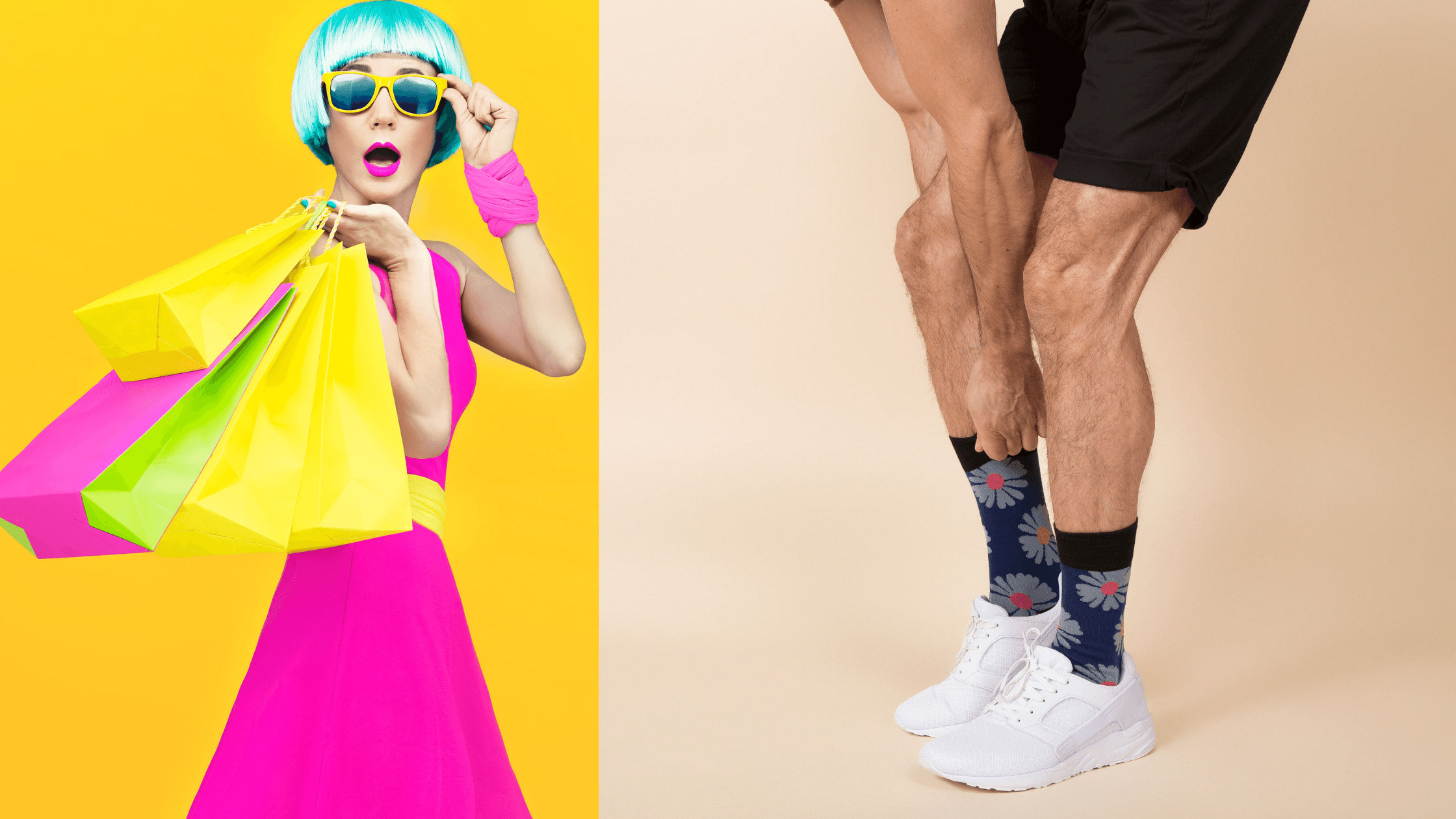


To style socks with any outfit, use the S.O.C.K. method, match sock weight to shoe weight, and choose a length that suits the occasion. That three-step sequence covers the vast majority of styling decisions you will ever face.
- Use the S.O.C.K. method (Silhouette, Outline, Colour, Knit/weight) to make a deliberate choice rather than a default one.
- Match sock weight to shoe weight: sheer socks with heels, medium rib with loafers, thick rib with chunky boots.
- Choose length by occasion: over-the-calf for formal, crew for everyday smart-casual, ankle or no-show only for genuinely sporty looks.
Pro Tip: Treat socks the way you treat a belt or a brooch. They are not an afterthought; they are the last accessory that ties the whole look together.
Table of Contents
- How does the S.O.C.K. method work step by step?
- How do you choose sock length and weight for different shoes?
- Eight outfit recipes you can copy right now
- Pro tips on proportion, texture, and seasonal bridging
- How to care for premium socks so they keep their look
- Common sock-styling mistakes and instant fixes
- Which socks work best for different occasions?
- Key takeaways
- Why socks deserve the same thought as any other accessory
- Useful sources
- FAQ
How does the S.O.C.K. method work step by step?
The S.O.C.K. method breaks every sock decision into four questions: What is the silhouette? What is the outline? What colour strategy fits? What knit weight works?
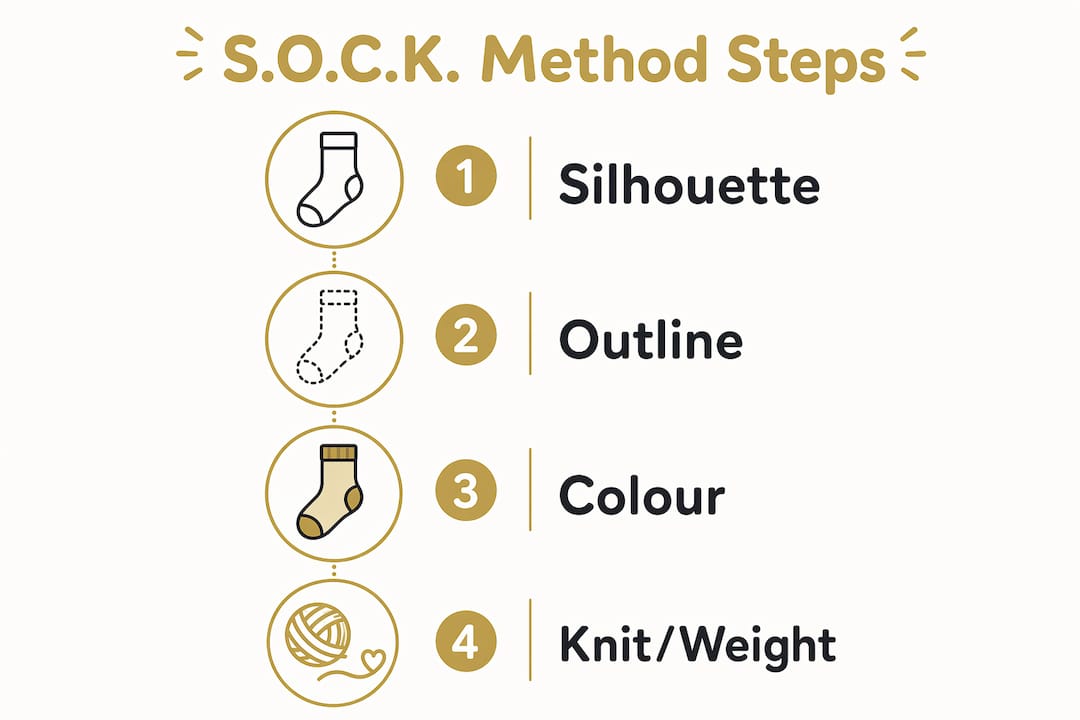
S — Silhouette looks at your hem length, shoe opening, and how much leg is visible. If the sock will barely show, choose “disappear mode”: a tonal or near-invisible pair. If the sock will be front and centre, choose “feature mode” and let it do the talking.
O — Outline is about the visual line between trouser hem and shoe. A sock fills that gap and either continues the leg line (tonal) or breaks it deliberately (contrast). Three colour strategies follow from this:
- Tonal: sock matches the trouser or the shoe. Elongates the leg, looks polished.
- Bridge: sock picks up a secondary colour already in the outfit. Ties the look together without shouting.
- Pop: sock is a deliberate contrast. Works when everything else is neutral.
Skin tone matters here too. Lighter skin tones can carry high-contrast pops without the sock dominating; deeper skin tones often find tonal or bridge strategies more flattering because the contrast reads as intentional rather than jarring.
C — Colour also covers pattern coordination. If your trousers are already patterned, keep the sock plain or in a micro-texture. If your outfit is solid, a bolder pattern on the sock reads as styled rather than chaotic.
K — Knit/weight is the most overlooked step. A sheer pointelle sock with a chunky trainer looks wrong because the weights fight each other. Match them: sheer or fine-knit with heels and pumps, medium rib with loafers and derbies, thick rib or cushioned cotton with chunky trainers and boots.
S.O.C.K. mini-checklist:
- What is my hem length and how much sock will show?
- Do I want the sock to disappear, bridge, or pop?
- Does my colour choice use tonal, bridge, or pop strategy?
- Does the sock weight match the shoe weight?
Pro Tip: Build a capsule sock drawer with 2–3 tonal pairs, 1–2 bridge colours, one crisp white crew, and one statement pair. That capsule sock balance covers almost every outfit combination without overthinking.

How do you choose sock length and weight for different shoes?
Pick length by formality and visibility: over-the-calf (OTC) for formal, crew for everyday smart-casual, ankle or no-show only for genuinely sporty or casual looks according to fashion-forward golf wear guidelines. British GQ advises against ankle and trainer socks in smart-casual settings entirely.
Rules of thumb:
- Crew with loafers: scrunch gently to mid-calf for a modern, relaxed finish.
- OTC for suiting: the sock should never slip below the trouser hem when you sit down.
- No-show or ankle only for trainers in casual contexts, never with loafers or derbies.
- White crew socks work as a modern accent with loafers, tailored shorts, or a midi skirt when the rest of the outfit is clean and simple.
| Shoe type | Recommended length | Why |
|---|---|---|
| Loafers | Crew (scrunched) | Modern preppy; pairs well with shorts and skirts |
| Pumps / heels | Sheer or fine-knit crew | Feminises the look; weight must stay light |
| Chunky trainers | Thick ribbed crew | Weight match; avoids a spindly-sock-heavy-shoe clash |
| Formal leather shoes | Over-the-calf | Stays up; no gap between sock and trouser |
| Ankle boots | Medium-weight crew | Visible above the boot shaft; adds colour or texture |
| Sandals | Thin crew or sheer | Deliberate contrast; lean into the eclectic angle |
Pro Tip: For the scrunch versus pin-straight question: scrunch when you want a relaxed, off-duty feel; keep the sock pin-straight when the look is tailored. You can also layer a white crew sock over black tights for a playful, trans-seasonal layering trick that extends summer shoes into autumn.
Eight outfit recipes you can copy right now
These recipes apply the S.O.C.K. rules directly. Each one names the exact items, the styling action, and the visual goal.
-
Casual trainers: White ribbed crew sock + chunky white trainer + straight-leg jeans. Pull the sock to just below the calf. Goal: clean, tonal line that makes the trainer look intentional.
-
Loafers with shorts: Bright white ribbed crew sock (mid-calf) + sleek leather penny loafer + tailored chino shorts + tucked polo. Scrunch the sock lightly. Goal: preppy contrast that keeps the silhouette sharp.
-
Loafers with a skirt: Tonal ribbed crew sock in camel or navy + leather loafer + A-line midi skirt. Let 2–3 cm of sock show below the hem. Goal: elongate the leg without breaking the colour line.
-
Heels with sheer socks: Fine pointelle or sheer crew sock + block-heel pump + tailored wide-leg trouser. The sock should whisper, not shout. Goal: a feminised, runway-ready finish that reads intentional.
-
Suiting with OTC: Plain navy or charcoal OTC sock + Oxford shoe + slim suit trouser. Sock must reach mid-calf and stay there. Goal: invisible from the outside, polished if the trouser rides up.
-
Smart-casual with chinos: Medium-weight ribbed crew in a bridge colour (burgundy with navy chinos, for instance) + derby shoe. Show 1–2 cm above the shoe. Goal: the sock ties the trouser and shoe together without matching either exactly.
-
Summer sandals: Thin cotton crew in a pop colour + strappy sandal + linen midi skirt. Lean into the contrast. Goal: eclectic and deliberate, not accidental.
-
Patterned socks with suede shoes: Bold geometric or striped sock + suede loafer or brogue + plain trousers. Keep everything else solid. Goal: the sock is the statement; the rest of the outfit is the frame.
Contradictions are encouraged when they are proportional. A sporty sock with a dressy shoe works precisely because the contrast is obvious enough to read as a choice, not a mistake.
Pro Tip: When using patterned socks with a patterned outfit, keep the scales different: a large check trouser pairs with a micro-stripe sock, never another large print.
Pro tips on proportion, texture, and seasonal bridging
Proportion and texture separate an accidental sock moment from a styled one. The key question is always: does the sock weight belong in the same visual conversation as the shoe?
Practical tips:
- Allow contrast in colour or texture, but not both at once. A textured sock in a neutral colour works; a textured sock in a clashing colour is too much.
- Scrunch for relaxed; pin-straight for tailored. The technique signals the register of the whole look.
- Seasonal bridging: a crew sock added to a summer sandal or open shoe carries it into September without buying new footwear. Crew socks are a trans-seasonal wardrobe tool that extends use across months.
- For socks with heels, proportion is everything. Use texture (pointelle, ruffle, fine rib) and keep a clear contrast between sock and shoe so the combination reads as deliberate.
| Do | Don’t |
|---|---|
| Match sock weight to shoe weight | Wear a thick trainer sock with a slim loafer |
| Scrunch crew socks with loafers | Leave ankle socks visible with smart shoes |
| Use a bridge colour to tie the outfit | Match sock exactly to trouser AND shoe simultaneously |
| Layer socks over tights for autumn | Wear no-show socks in smart-casual contexts |
Pro Tip: Trainer socks with trainers in a smart-casual setting is the single most common mistake. Swap to a plain ribbed crew and the whole outfit lifts immediately.
How to care for premium socks so they keep their look
Caring for premium socks preserves fit, colour, and texture. The fibre dictates the method.
- Cotton blends and mercerised cotton: machine wash at 30°C, inside out, on a gentle cycle. Air dry flat.
- Merino wool: hand wash or delicates cycle at 30°C maximum. Never tumble dry. Reshape and dry flat.
- Cashmere and luxury blends: hand wash in cool water with a specialist detergent. Dry flat away from direct heat. Store folded, not hung, to prevent stretching.
Daily care checklist:
- Rotate pairs so no single sock takes repeated wear.
- Turn socks inside out before washing to protect colour and texture.
- Use a mesh laundry bag for cashmere and fine knits.
- De-pill with a fabric comb, not a razor, to avoid snagging.
- Store folded in a drawer rather than balled up, which strains the elastic.
Pro Tip: A Sock Geeks subscription delivers fresh pairs on rotation, which naturally prevents the overuse that degrades premium fibres fastest.
Common sock-styling mistakes and instant fixes
Most mistakes are proportion or weight mismatches. One swap usually fixes them.
- Ankle sock with loafers → swap to a crew; scrunch lightly.
- Trainer sock in a smart-casual look → replace with a plain ribbed crew in a neutral.
- Sock colour clashes with both trouser and shoe → use the bridge strategy: pick a colour already present in the outfit.
- Pattern overuse (patterned sock + patterned trouser + patterned shirt) → keep two elements plain; let one pattern lead.
- Sock slides or bunches → the sock is the wrong weight or size; a well-fitted, quality pair stays put.
Before you leave the house:
- Check that the sock weight matches the shoe weight.
- Check that the sock colour uses tonal, bridge, or pop strategy — not an accidental clash.
Pro Tip: If you are unsure, tonal is always safe. A sock that matches your trouser or shoe never looks wrong, even if it does not excite.
Which socks work best for different occasions?
The occasion sets the formality, and formality sets the length and weight.
Formal events (weddings, black tie, business meetings): OTC in plain navy, charcoal, or black. No patterns, no novelty prints. The sock should be invisible in action and impeccable if glimpsed.
Smart-casual (office, dinner, gallery openings): crew in a solid or subtle texture. A bridge colour adds personality without breaking the dress code. Avoid ankle socks entirely in this register.
Casual weekend: crew or ankle, depending on the shoe. White crew with trainers or loafers is the default that works. Patterned or statement socks suit casual contexts best because the rest of the outfit can absorb the contrast.
Sport and active: technical ankle or no-show. Cushioning and moisture management matter more than aesthetics here.
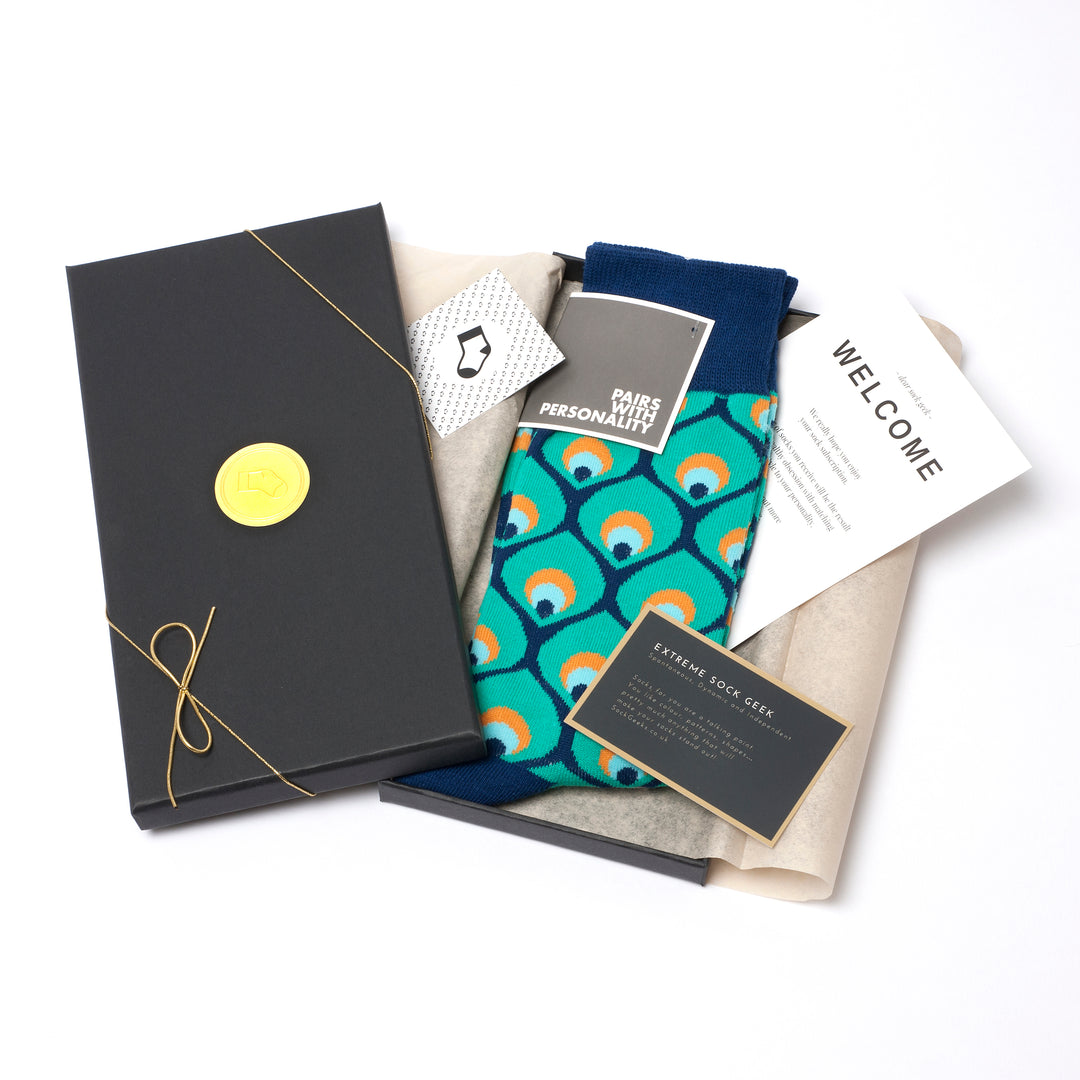
Gifting occasions: a curated gift box from Sock Geeks with a mix of tonal, bridge, and statement pairs covers every occasion the recipient will face, which is why the personalised quiz matters so much when selecting.
Key takeaways
The three rules that govern every sock-styling decision are: use the S.O.C.K. method, match sock weight to shoe weight, and choose length by occasion.
| Point | Details |
|---|---|
| Use the S.O.C.K. method | Work through Silhouette, Outline, Colour, and Knit/weight before choosing a pair. |
| Match weight to shoe | Sheer socks with heels, medium rib with loafers, thick rib with chunky boots. |
| Length by formality | Over-the-calf for formal, crew for smart-casual, ankle only for genuinely sporty looks. |
| Build a capsule drawer | Keep 2–3 tonal pairs, 1–2 bridge colours, one white crew, and one statement pair. |
| Tonal is always safe | When in doubt, match the sock to the trouser or shoe and the look will hold. |
Sock Geeks’ personalised subscription quiz is designed to build exactly this capsule drawer for you, pair by pair.
Why socks deserve the same thought as any other accessory
Most people reach for socks last and think about them least. That is the wrong order entirely. A sock is the visual full stop at the end of a trouser leg, and like any punctuation mark, the wrong one changes the meaning of the whole sentence.
What I find genuinely interesting about the S.O.C.K. method is that it makes explicit something stylists have always done instinctively: they think about the sock at the same time as the shoe, not after. The weight question alone eliminates the most common errors. Once you start asking “does this sock belong in the same visual weight class as this shoe?”, the answer is usually obvious.
Sock Geeks’ approach to personalisation maps directly onto this. The subscription quiz asks about your wardrobe, your shoes, and your aesthetic, then curates pairs that cover the tonal, bridge, and statement slots in your drawer. With a 4.72 customer rating and premium, ethically sourced materials across every pair, the curation is doing the S.O.C.K. thinking for you. That is not a small thing when you are standing in front of a wardrobe at 7:30 in the morning.
The one thing I would add beyond the method: be willing to look a little deliberate. The looks that read as “styled” rather than “dressed” are almost always the ones where someone made a choice that could have gone wrong but did not. A bold sock in an otherwise quiet outfit signals confidence. That is worth more than a safe match.
Useful sources
The rules in this article draw on styling guides and trend reporting from the following sources. Each one is worth reading in full.
- The S.O.C.K. method by Asta, Fit Happens: primary source for the S.O.C.K. framework, colour strategies, and capsule drawer recommendations.
- British GQ: which socks to wear and when: formality mapping, OTC guidance, and the trainer-sock warning.
- Glamour: how to style socks: crew socks with loafers trend and the scrunch technique.
- Glamour UK: how to style socks and shorts: sheer socks with heels and tailored shorts recipes.
- Men’s Health: how to style socks with loafers: loafers and shorts recipe with white crew sock detail.
- InStyle: how to wear crew socks: trans-seasonal use, runway context, and layering over tights.
FAQ
What is the S.O.C.K. method for styling socks?
The S.O.C.K. method stands for Silhouette, Outline, Colour, and Knit/weight. It gives you four sequential questions to answer before choosing a sock, so every pairing is deliberate rather than accidental.
When should you wear over-the-calf socks versus crew socks?
Over-the-calf socks suit formal wear because they stay up and never gap below the trouser hem. Crew socks are the right choice for smart-casual and everyday looks, particularly with loafers or skirts.
Can you wear socks with heels?
Yes. Use a sheer or fine-knit sock and keep the weight light to match the delicacy of the heel. Proportion and texture are what make the combination look intentional rather than mismatched.
What is the tonal, bridge, and pop colour strategy?
Tonal means the sock matches the trouser or shoe to elongate the leg. Bridge means the sock picks up a secondary colour already in the outfit. Pop means the sock is a deliberate contrast to an otherwise neutral look.
How do you care for cashmere and luxury blend socks?
Hand wash in cool water with a specialist detergent, reshape, and dry flat away from direct heat. Never tumble dry, and store folded rather than balled up to preserve the elastic and fibre structure.




Leave a comment