





The role of sock length in outfit styling: 2026 guide
Sock length is one of the most decisive styling variables in any outfit, determining whether your look reads as polished, casual, or simply unfinished. The role of sock length in outfit styling goes far beyond comfort: it controls silhouette continuity, signals formality, and reveals whether your choices are deliberate or accidental. Most people treat socks as an afterthought, and that is precisely where outfits quietly fall apart. Get the length right, and every other element of your look falls into place.
How does sock length affect outfit aesthetics?
Sock length is defined by the distance the sock rises above the ankle bone, and each increment carries a distinct visual and functional meaning. The five standard lengths are no-show, quarter, crew, mid-calf, and over-the-calf. Each one suits a different combination of shoe type, occasion, and season.
Sock length reflects formality: no-show socks evoke casual looks, while mid-calf and over-the-calf socks denote business casual and formalwear. That single principle is the foundation of every sock styling decision you will make.
| Sock length | Height above ankle | Best shoe pairing | Occasion suitability |
|---|---|---|---|
| No-show | Below ankle bone | Trainers, loafers, boat shoes | Casual, warm weather |
| Quarter | 3–4 inches above ankle | Trainers, casual lace-ups | Casual, sport, everyday |
| Crew | 6–8 inches (mid-calf) | Boots, casual shoes, high-tops | Casual, smart casual |
| Mid-calf | Just below the calf | Chukka boots, dress shoes | Smart casual, business casual |
| Over-the-calf | Reaches the calf or above | Oxford shoes, brogues, loafers | Business, formalwear |
Quarter socks sit about 3–4 inches above the ankle bone, while crew socks sit around 6–8 inches, landing at the mid-calf. That height difference changes how much leg is visible and how much warmth the sock provides. Crew socks provide more coverage and warmth than quarter socks, making them the better choice for boots and cold weather. No-show socks, by contrast, disappear entirely into the shoe, creating a bare-ankle effect that reads as relaxed and warm-weather appropriate.
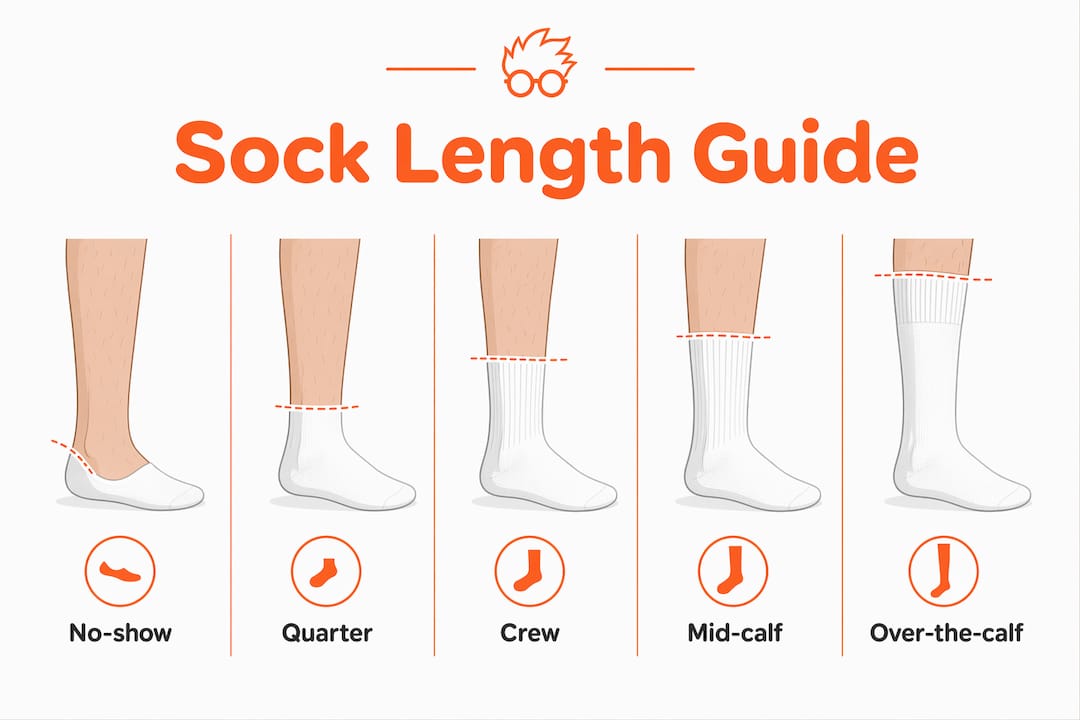
Pro Tip: When you are unsure which length to reach for, match the sock height to the shoe collar. A low-cut trainer calls for a quarter or no-show sock. A tall Chelsea boot calls for a crew or mid-calf sock.
Why does sock length matter for formalwear?
The single biggest styling error in formalwear is the bare-ankle gap: the strip of skin that appears between a trouser hem and a short sock when you sit down. For dress shoes and trousers, mid-calf or over-the-calf socks are recommended to prevent this gap and maintain silhouette continuity. The fix is straightforward, and the visual difference is significant.
Trousers shift upward when you sit or cross your legs. A sock that looks adequate while standing can expose two inches of ankle the moment you take a seat. This is why sock-length correctness is more about managing movement than pure aesthetics: trousers shift and expose ankles when seated, making height selection a practical necessity rather than a stylistic preference.
Colour coordination compounds the effect. Matching socks to trousers rather than shoes creates a continuous vertical line, making legs appear longer and more refined. A navy suit paired with navy socks and black Oxford shoes reads as a single unbroken line from waist to floor. Swap those navy socks for white sports socks, and the entire silhouette fractures.
The key rules for formalwear sock length are:
- Choose mid-calf or over-the-calf socks with any tailored trouser.
- Match sock colour to trouser colour, not shoe colour.
- Avoid quarter socks entirely with dress shoes.
- Never wear no-show socks with a suit, regardless of the season.
- Check coverage while seated, not just while standing.
Pro Tip: Before leaving the house in a formal outfit, sit down and cross your legs. Test sock height seated to confirm no skin is visible. If any skin shows, switch to a longer length.
How to use sock length as a deliberate style statement
Visible socks are not a styling accident. In streetwear and contemporary fashion, a deliberately exposed sock is a considered accent, and the length you choose controls how that accent reads. The key word is deliberate. Visible sock looks require mastery of proportion and deliberate styling; sloppy execution diminishes the intended fashion impact.
Getting visible sock styling right comes down to four decisions:
-
Choose the right sock length for your shoe. Crew socks with loafers create a classic, slightly retro look. Quarter socks peeking above a low-cut trainer read as sporty and relaxed. Over-the-calf socks worn with shorts make a bold, fashion-forward statement.
-
Scrunch intentionally. Scrunching socks before wear enhances the polished casual look, especially with loafers or trainers. A pin-straight sock can look stiff and unintentional. A gently scrunched crew sock signals that you know exactly what you are doing.
-
Align pant hem with shoe height. Sock length and pant hem length must work in partnership for a coherent silhouette in visible sock styling. Cropped trousers or turned-up hems are the natural companion to visible socks. Full-length trousers that break over the shoe will bury the sock entirely and create a cluttered line at the ankle.
-
Use colour and pattern as an accent. A bold stripe or a contrasting colour at the ankle draws the eye intentionally. This works best when the rest of the outfit is relatively neutral, letting the sock do the talking without competing with other elements.
Treating socks as part of the leg line, rather than a separate accessory, is the mental shift that makes visible sock styling work. Choosing heights for either continuous silhouette or intentional contrast is the framework behind every successful visible sock look.
Which sock length suits which shoe and occasion?
Matching sock length to shoe type is the most practical skill in sock styling. The wrong combination creates bulk, slippage, or visual confusion. The right combination is invisible in the best possible way: the outfit simply looks correct.
Dress shoes and Oxford brogues demand over-the-calf or mid-calf socks. Anything shorter risks the seated ankle gap. Stick to plain colours in wool or cotton blends for the most refined result.
Chelsea boots and chukka boots work well with crew or mid-calf socks. The sock should not bunch visibly above the boot shaft. A crew sock in a complementary colour keeps the transition between boot and trouser clean.
Loafers are the most versatile shoe for sock experimentation. No-show socks give a clean, sockless appearance for summer. Crew socks worn visibly with cropped trousers create a smart casual look that suits both office and weekend wear.
Trainers pair naturally with quarter or no-show socks for everyday wear. For a more considered streetwear look, a crew sock worn slightly scrunched adds texture and personality without overwhelming the shoe.
Sandals are the one shoe type where socks remain genuinely optional as a fashion choice rather than a practical one. When worn deliberately with sandals, a crew or over-the-calf sock in a contrasting colour reads as a fashion statement rather than a mistake.
Common pitfalls to avoid:
- Wearing ankle socks with dress trousers: the sock slips, the gap appears, and the outfit loses credibility.
- Choosing socks that are too thick for the shoe: excess bulk distorts the shoe's silhouette and creates discomfort.
- Ignoring pant hem length when selecting visible sock height: a mismatched proportion undermines even well-chosen socks.
- Wearing white sports socks with any non-athletic outfit: the contrast is too stark and reads as unintentional.
Key takeaways
Sock length controls outfit formality, silhouette continuity, and styling intentionality across every shoe type and occasion.
| Point | Details |
|---|---|
| Formality is signalled by length | No-show socks read as casual; over-the-calf socks signal formalwear and business dress. |
| Avoid the seated ankle gap | Mid-calf or over-the-calf socks prevent exposed skin when trousers ride up while seated. |
| Match socks to trouser colour | Aligning sock and trouser colour creates a longer, more refined leg line in formal outfits. |
| Scrunch for visible sock looks | Gently scrunching crew socks adds intentionality and style edge when wearing visible socks. |
| Pant hem and sock height are linked | Cropped or turned-up hems work with visible socks; full-length trousers bury the sock entirely. |
Sock length changed how I see every outfit
I spent years treating socks as the last decision before leaving the house. The result was a wardrobe full of outfits that looked almost right but never quite landed. The problem, almost every time, was sock length.
The moment that changed things for me was sitting down in a pair of tailored trousers and noticing two inches of bare ankle staring back at me. The suit was good, the shoes were good, and the socks were completely wrong. Switching to over-the-calf socks in the same colour as my trousers transformed the look without changing a single other element.
What I have found since then is that most styling mistakes involving socks are not about colour or pattern. They are about height. A crew sock worn with a loafer and cropped trousers is a considered choice. The same crew sock worn with full-length dress trousers and Oxford shoes is a mismatch. The sock did not change. The context did.
My honest advice is to experiment with visible socks before you dismiss them. Start with a neutral crew sock, a pair of loafers, and cropped chinos. Scrunch the sock slightly and see what happens. The result is almost always better than you expect, and it opens up a whole dimension of outfit building that most people never touch.
Socks worth styling: the Sockgeeks subscription
Building a wardrobe of socks across multiple lengths takes time, and most people end up with a drawer full of identical ankle socks that only work for one occasion.

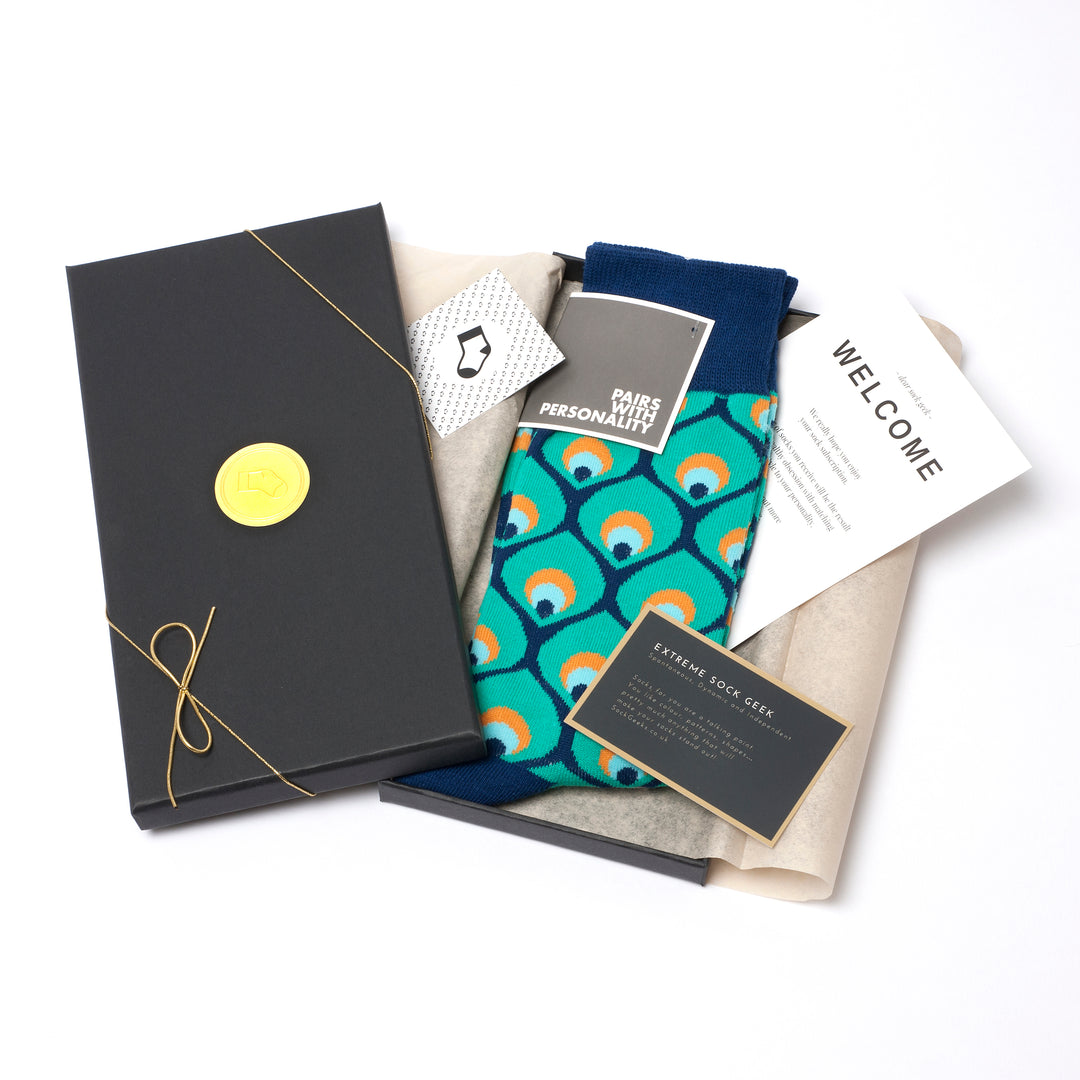
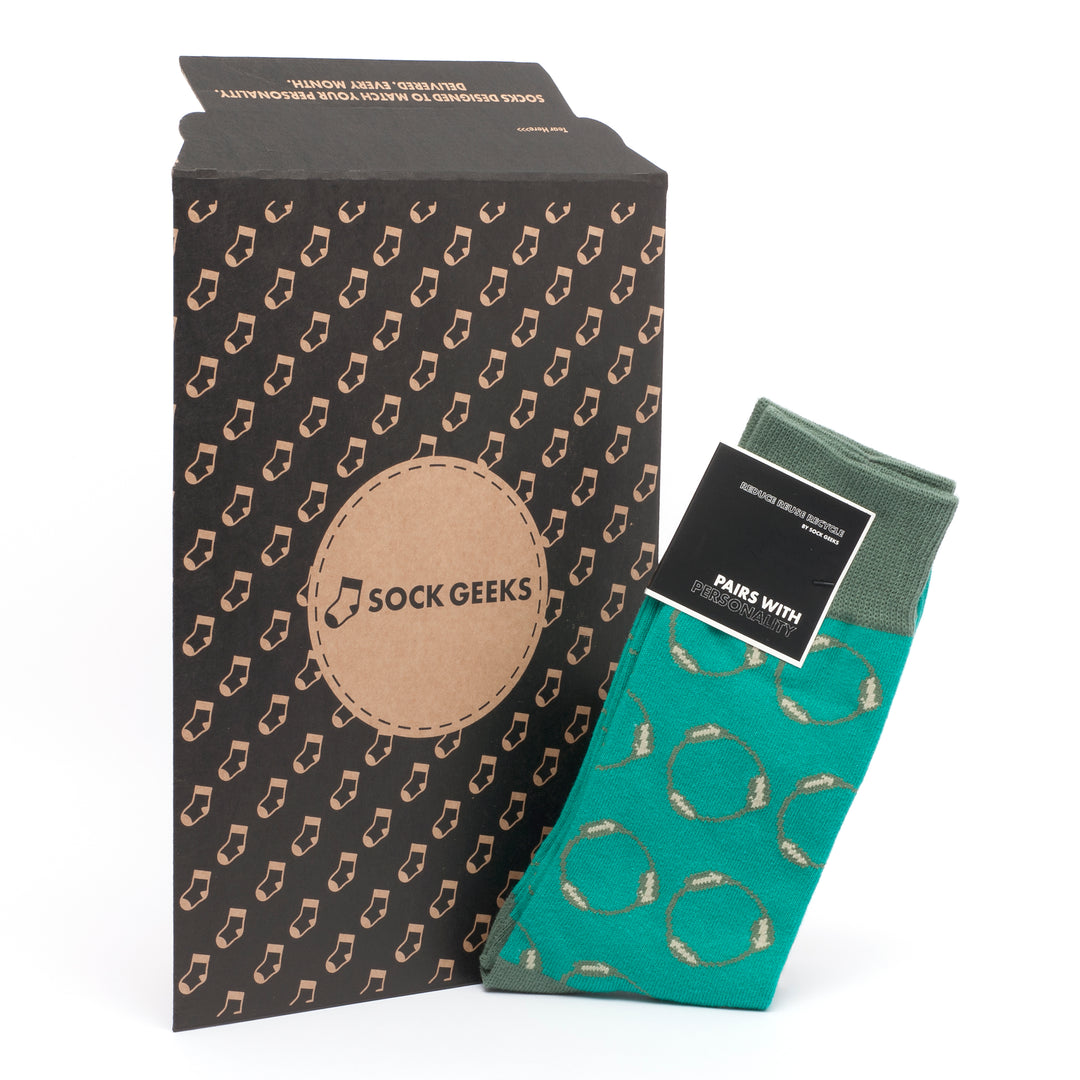
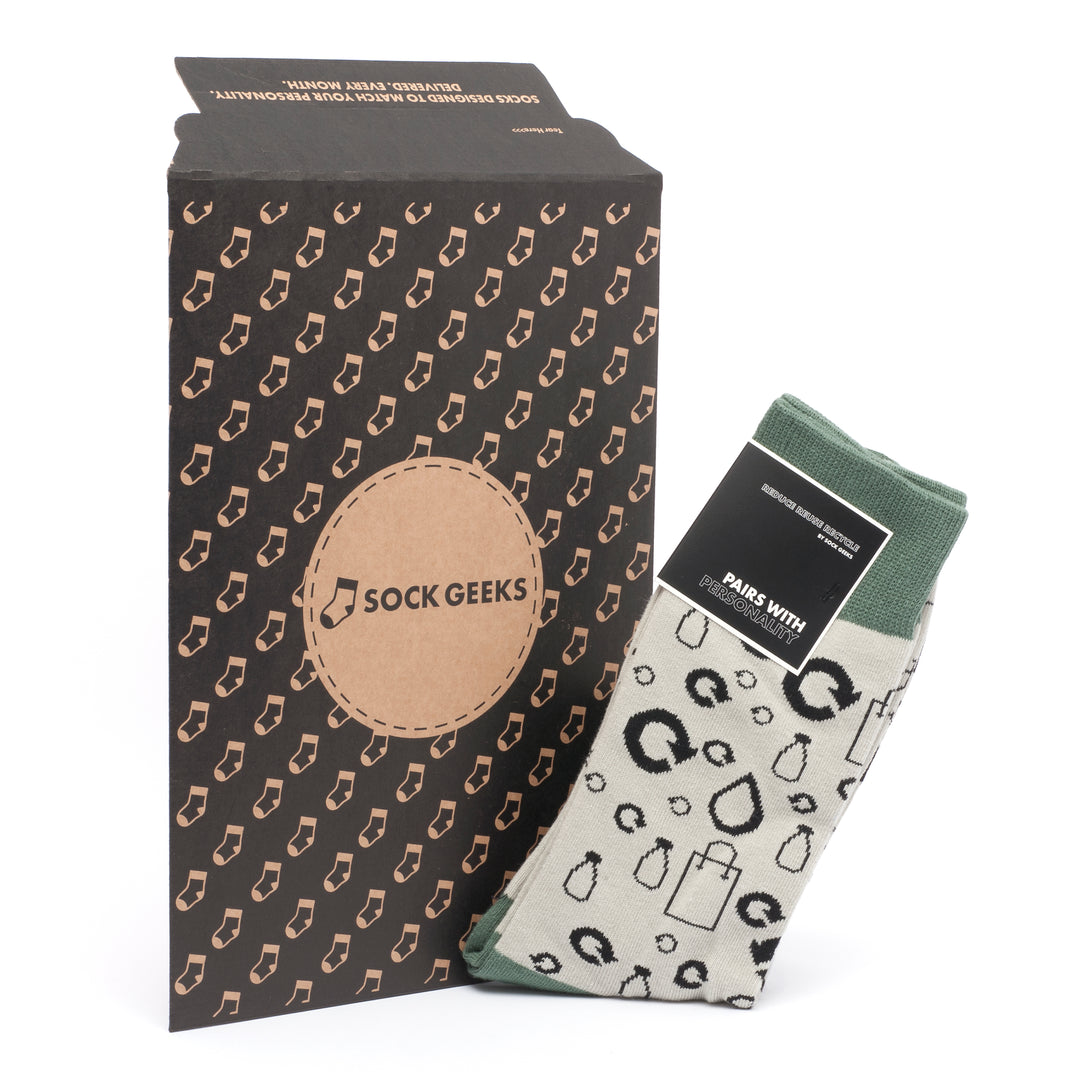
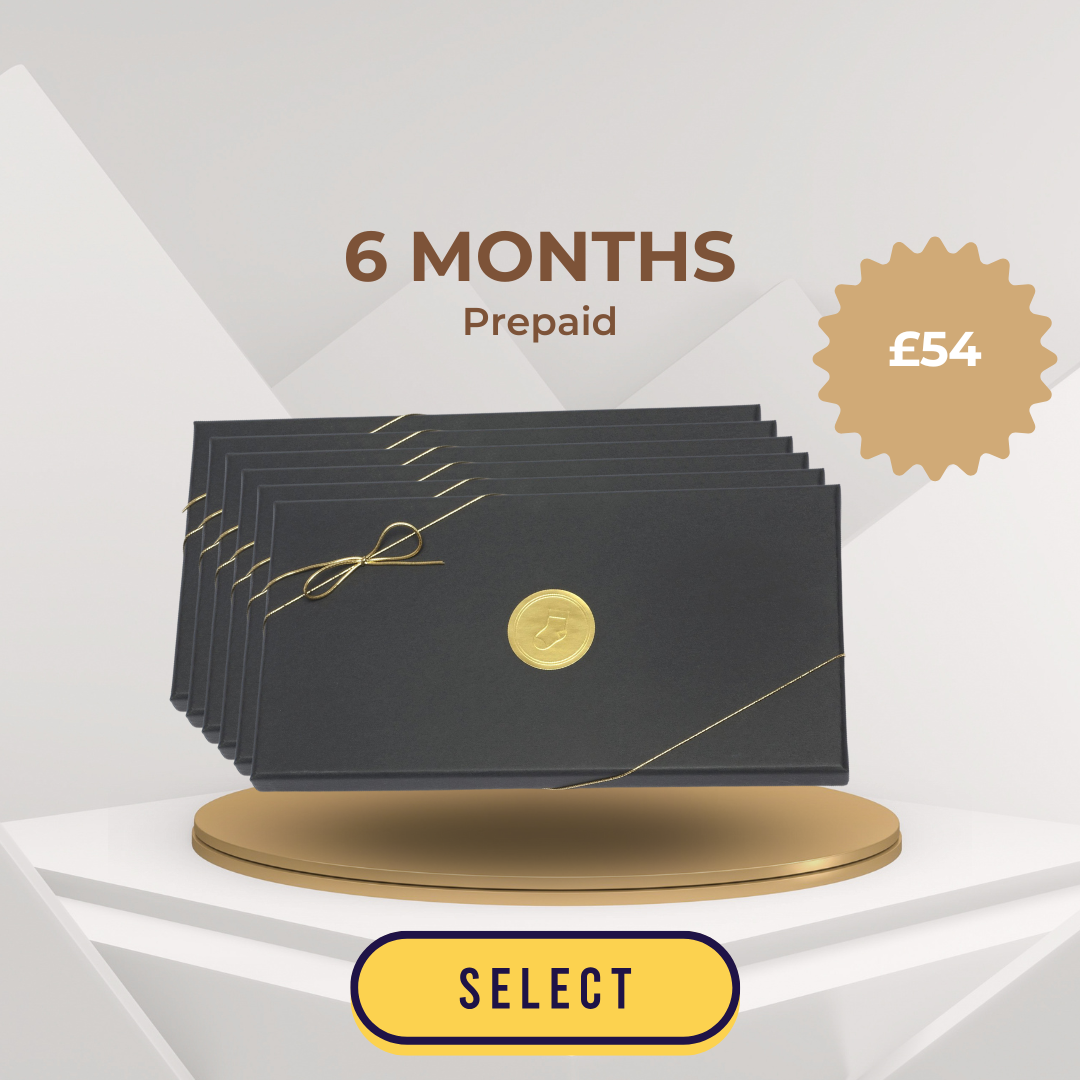
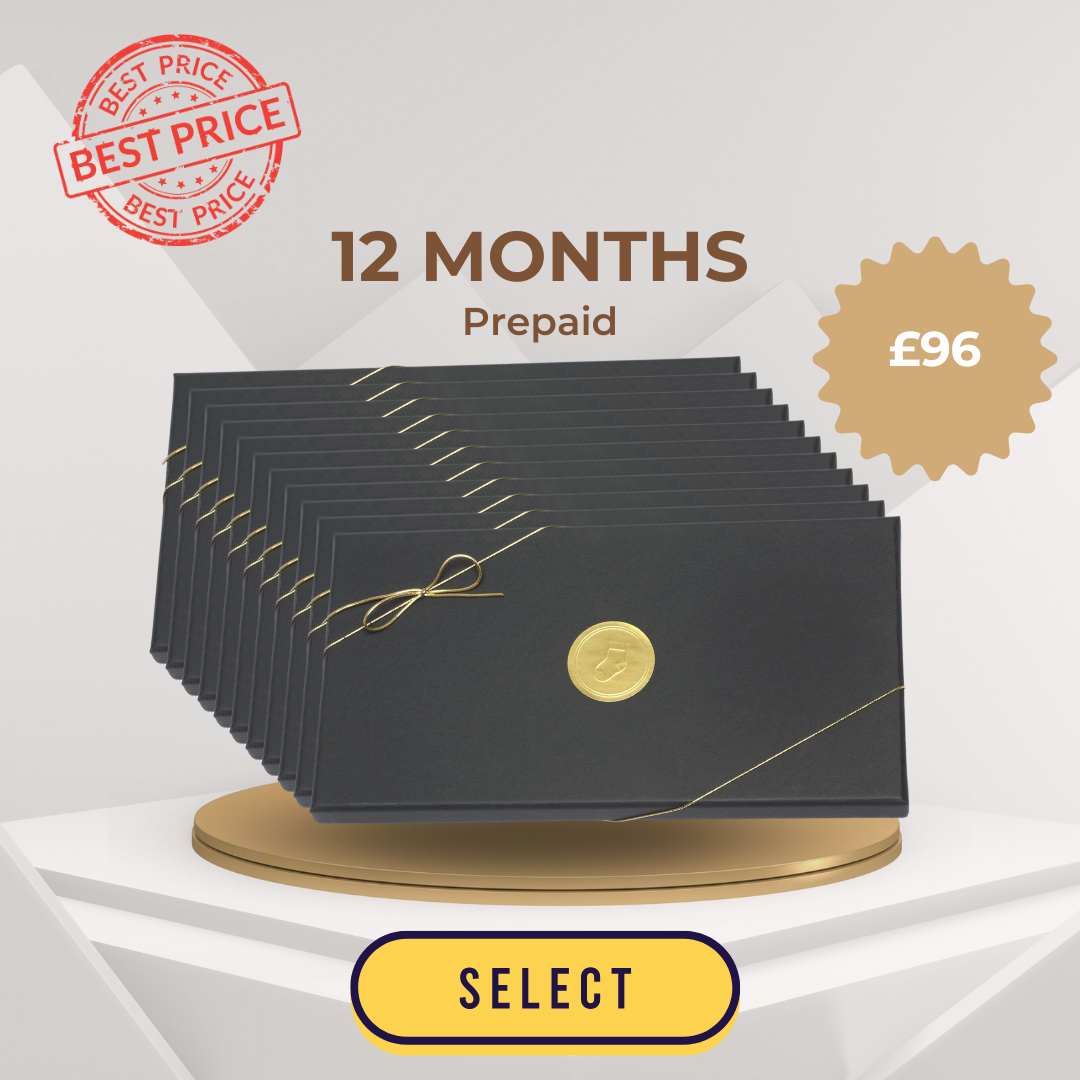
Sockgeeks solves that problem with a monthly sock subscription that delivers curated socks matched to your personality, interests, and style. Each delivery includes designs you would not find on a standard high-street rail, covering the lengths and styles needed for everything from a formal meeting to a weekend in trainers. Sockgeeks has been doing this since 2016, and the personality quiz at the heart of the service means every pair genuinely suits the person receiving it. For anyone serious about sock styling, having the right lengths already in the drawer makes every outfit decision faster and better.
FAQ
What is the best sock length for a formal suit?
Over-the-calf socks are the best choice for a formal suit. They stay in place throughout the day and prevent the bare-ankle gap when seated.
Can you wear no-show socks with trousers?
No-show socks are not suitable for tailored trousers or formal occasions. They are designed for trainers, loafers, and casual shoes in warm weather.
How do I style visible socks without looking sloppy?
Choose crew socks in a complementary colour, scrunch them slightly, and wear them with cropped trousers or turned-up hems. Proportion and intention are what separate a fashion statement from a mistake.
Should socks match shoes or trousers?
Socks should match trousers in formal outfits. Matching sock colour to trouser colour creates a continuous vertical line that makes the leg appear longer and the outfit more refined.
What sock length works best with Chelsea boots?
Crew or mid-calf socks work best with Chelsea boots. The sock should sit neatly inside the boot shaft without bunching visibly above the opening.



Leave a comment