





Fabric composition is the single most important factor determining how well a work sock performs across a long day on your feet. The right material controls moisture, reduces friction, and holds its shape through repeated washing. The wrong one compresses when wet, raises your blister risk, and falls apart within months. Understanding why fabric matters in work socks gives you the knowledge to buy once, buy well, and protect your feet in the process.
Why fabric matters in work socks: moisture, comfort, and foot health
Moisture management is where fabric choice has its most direct impact on foot health. Cotton absorbs sweat passively but holds that liquid against your skin, softening the skin barrier and raising the risk of blistering during long hours in enclosed footwear. That retained moisture degrades your foot’s natural protection and creates the warm, damp conditions that cause real discomfort by mid-afternoon.
Synthetic fibres work differently. Moisture-wicking materials use capillary action to actively pull sweat away from your skin and push it toward the outer layer of the sock, where it can evaporate. This one-way transport system keeps your skin surface dry throughout the day. The difference is not subtle. After eight hours in protective footwear, a dry foot and a saturated one feel completely different.

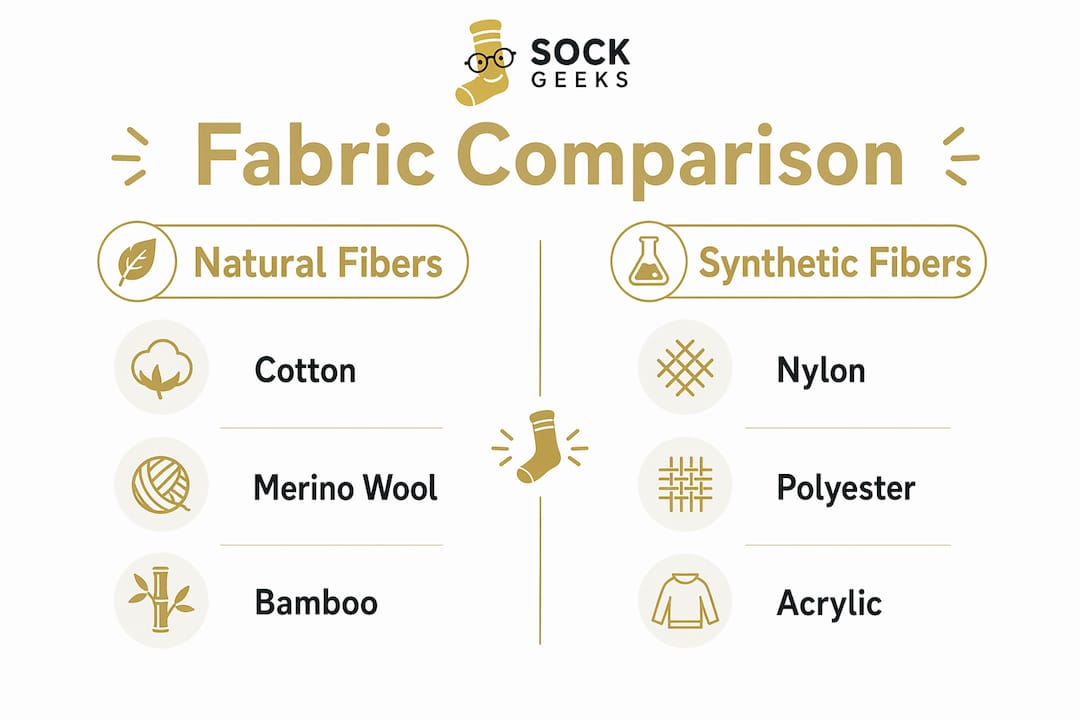
The table below shows how the most common work sock materials compare on moisture interaction, skin impact, and durability.
| Material | Moisture interaction | Skin impact | Durability |
|---|---|---|---|
| Cotton | Absorbs and retains moisture | Increases maceration and blister risk | Moderate; degrades faster when wet |
| Nylon blend | Wicks moisture via capillary action | Keeps skin dry, reduces friction | High; resists compression and wear |
| Merino wool | Regulates moisture and temperature | Soft, anti-microbial, low odour | Moderate; less durable than synthetics |
| Polyester blend | Wicks sweat efficiently | Dry surface, reduces skin irritation | High; holds shape through heavy use |
Pro Tip: If your work involves physical activity or warm environments, choose a nylon or polyester blend over pure cotton. If temperature regulation matters more than raw durability, a merino wool blend offers softness, breathability, and natural anti-microbial properties.
Does fabric durability affect the cost of work socks?
Fabric choice directly determines how long your socks last, and that affects the real cost per wear. Cotton compresses and stiffens when wet, which increases friction against the fabric itself. That friction accelerates wear, particularly at the heel and ball of the foot. A cheap cotton multi-pack may feel fine on day one but starts thinning within a few months of regular use.
Blends of nylon, acrylic, and wool hold their structure far better. Synthetic fibres like nylon and polyester do not saturate or compress under load, which preserves both the fabric and the foot beneath it. The sock keeps its cushioning and shape through hundreds of washes rather than dozens.
Key durability factors to weigh when choosing work sock fabrics:
- Fibre strength: Nylon and polyester resist abrasion better than cotton, particularly in high-friction zones.
- Wet performance: Synthetic blends maintain their structure when damp; cotton loses it.
- Wash tolerance: Blended fibres hold their shape across repeated machine washes at moderate temperatures.
- Blend ratio: A higher nylon content generally means greater durability; a higher merino content means greater softness but slightly reduced lifespan.
- Fabric weight: Heavier gauge fabrics offer more cushioning and last longer in physically demanding roles.
“Buying socks costing £15–£20 per pair is worth it. They last longer and offer better fit and comfort than budget multi-packs that fail in months.” — Expert commentary via iNews
Investing in premium sock fabrics reduces how often you replace them. The upfront cost is higher, but the cost per wear drops significantly over time.
How does fabric texture affect fit and skin comfort?
Fabric construction shapes how a sock sits on your foot, and that has a direct effect on friction and irritation. A poorly constructed sock shifts during movement, creating pressure points and rubbing that lead to blisters. The texture and softness of the fibre determines how much friction builds up between the sock and your skin over the course of a day.
One of the most effective advances in sock construction is the left-right asymmetric design. Rather than producing a single symmetrical tube, this approach tailors each sock to the specific anatomy of the left and right foot. Industry analysts describe this as the pinnacle of sock comfort, and the difference is measurable in reduced pressure points and improved fit. Paired with a quality fabric blend, an anatomically shaped sock eliminates the bunching and slipping that cause most in-shoe discomfort.
- Choose a fibre with natural softness. Merino wool and bamboo blends sit gently against the skin and reduce the micro-friction that causes irritation over long shifts.
- Look for reinforced zones. Quality work socks use denser fabric at the heel and toe, where wear concentrates. This is a construction feature, not just a marketing claim.
- Check for left-right labelling. Asymmetric designs cost more but deliver a measurably better fit and last longer because the sock sits correctly on the foot.
- Wash at the right temperature. Hot washes cause shrinkage and distortion in blended fibres, and fabric softeners can impair the moisture-wicking performance of nylon. A cool or warm wash preserves both fit and function.
Pro Tip: Turn your work socks inside out before washing. This reduces surface pilling and protects any reinforced zones from abrasion inside the drum.
Merino wool blends also offer anti-microbial properties and temperature regulation, which makes them particularly useful for roles that involve moving between warm and cool environments throughout the day. They are softer than synthetics but require slightly more care to maintain their performance.
How to choose the right sock fabric for your work environment
The right fabric depends on your specific working conditions. A construction worker standing on concrete all day has different needs from an office professional or a healthcare worker on a ward. Matching the material to the environment is how you get real value from your socks.
Factors to consider before buying:
- Workplace temperature: Hot environments demand strong moisture-wicking synthetics. Cool or outdoor environments benefit from merino wool blends that regulate temperature in both directions.
- Physical activity level: High-movement roles need fabrics that stay in place and resist compression. Nylon blends perform best here.
- Footwear type: Enclosed safety boots trap heat and moisture. Synthetic wicking fabrics are non-negotiable in this context. Cotton is a poor choice.
- Shift length: Longer shifts increase cumulative moisture and friction. The more hours you spend on your feet, the more the fabric choice matters.
- Skin sensitivity: If you have sensitive skin or a history of blisters, prioritise softer fibres with a smooth knit construction and an anatomical fit.
One persistent myth is that cotton is always the most comfortable option. Cotton feels pleasant initially, but its comfort drops sharply once it absorbs sweat. For short, low-activity wear it is adequate. For any professional environment involving movement, heat, or prolonged wear, a synthetic or wool blend outperforms it consistently.
Sock Geeks’ buyer’s guide to high-quality sock designs covers the specific construction features to look for when shopping, including fibre content labels, reinforcement zones, and fit indicators. For a broader view of building a work-ready sock collection, the professional sock wardrobe guide offers practical advice on matching sock types to different professional settings.
Key takeaways
Fabric composition determines work sock performance across moisture control, durability, fit, and long-term cost, making it the most important factor in any professional sock purchase.
| Point | Details |
|---|---|
| Cotton retains moisture | Cotton holds sweat against the skin, raising blister risk during long shifts in enclosed footwear. |
| Synthetic blends wick effectively | Nylon and polyester use capillary action to keep skin dry and preserve fabric structure. |
| Durability reduces cost per wear | Socks costing £15–£20 per pair outlast cheap multi-packs and deliver better long-term value. |
| Asymmetric fit reduces friction | Left-right anatomical designs eliminate pressure points and extend sock lifespan. |
| Washing habits protect performance | Cool washes and no fabric softener preserve moisture-wicking properties and fabric shape. |
Why I stopped buying cheap work socks and never looked back
I spent years buying budget cotton multi-packs and telling myself the price made them practical. The reality was that I replaced them every few months, dealt with blisters during long days, and never once thought the problem was the fabric. When I switched to a nylon blend with a merino component, the difference was immediate and obvious. My feet stayed drier, the socks held their shape after washing, and I stopped thinking about my feet mid-afternoon, which is exactly what a good work sock should achieve.
The conventional wisdom that expensive socks are a luxury is wrong. A pair that lasts two years and keeps your feet comfortable costs less per wear than a cheap pair that fails in four months and causes blisters along the way. The maths is straightforward once you run it.
What I find most people overlook is care. Even the best fabric blend degrades quickly if you wash it at high temperatures or use fabric softener on moisture-wicking materials. The sock does its job. You need to do yours by following the care label. That simple habit extends the life of a quality pair by months.
The other thing worth saying plainly: the brand matters less than the fibre content label. Read what the sock is actually made from. If the label says 80% cotton with no synthetic component, it will behave like cotton regardless of what the packaging claims. Look for nylon, polyester, or merino in the blend, and check that the construction includes reinforced zones at the heel and toe. Those two checks will tell you more than any marketing copy.
— Amanda
Sock Geeks: premium fabrics chosen for performance
Sock Geeks selects socks based on fabric quality, construction, and comfort, not just appearance. Every pair in the range is chosen with material performance in mind, from moisture-wicking blends for active wear to merino options for temperature-sensitive environments.

The subscription service matches you to designs and fabrics that suit your preferences through a personality quiz, so you receive socks that work for your lifestyle rather than a generic selection. With a 4.72 customer rating and ethically sourced materials throughout, Sock Geeks takes the guesswork out of finding work socks that genuinely perform. Visit Sock Geeks to browse the full range or start a subscription built around quality fabrics and your personal style.
FAQ
What is the best fabric for work socks?
Nylon and polyester blends are the best choice for most work environments because they wick moisture efficiently and resist wear. Merino wool blends suit roles requiring temperature regulation and a softer feel.
Why does cotton perform poorly in work socks?
Cotton holds moisture against the skin rather than moving it away, which softens the skin barrier and increases blister risk during long shifts in enclosed footwear.
How does fabric affect how long work socks last?
Synthetic blends maintain their structure when wet and resist compression under load, lasting significantly longer than cotton socks that stiffen and degrade with repeated moisture exposure.
What is a left-right asymmetric sock design?
A left-right asymmetric design tailors each sock to the specific anatomy of the left and right foot, eliminating pressure points and improving fit. Experts describe it as the most effective construction advance in work sock comfort.
How should I wash work socks to preserve fabric performance?
Wash at cool or moderate temperatures and avoid fabric softener on moisture-wicking synthetic blends. Hot washes cause shrinkage and distortion, while fabric softener coats fibres and reduces their ability to wick sweat.





Leave a comment