



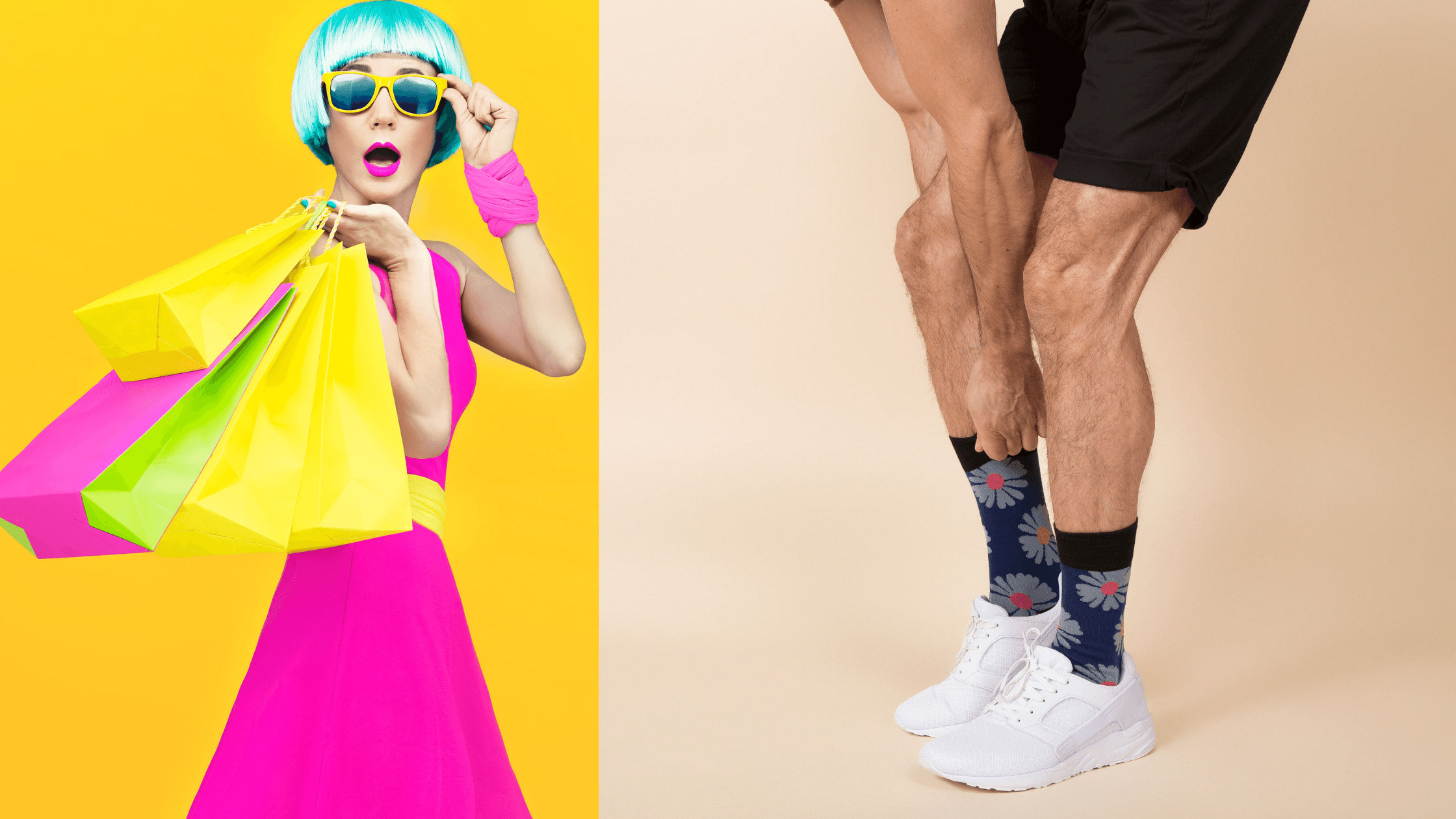


Why professionals wear quality socks
Quality socks worn by professionals are deliberately engineered garments that combine superior materials and craftsmanship to deliver comfort, longevity, and a polished appearance. The reason why professionals wear quality socks comes down to a simple truth: your feet carry you through eight or more hours of meetings, commutes, and desk work, and what covers them directly affects your performance and presence. Poor socks cause blisters, odour, and sagging fabric that bunches inside expensive shoes. Quality socks prevent all three. This guide explains exactly what separates a premium pair from a cheap one, and why that difference matters every working day.
What makes professional quality socks different in materials and construction?
Professional socks are defined by their fibre blend, yarn processing, and machine gauge. These three factors determine everything from how a sock feels at 9AM to whether it still holds its shape at 6PM.
Fibre blends that perform under pressure
The optimal blend for dress socks is approximately 70% natural fibre such as merino wool or combed cotton, 15–25% nylon for durability, and 1–3% elastane for fit retention. That ratio is not arbitrary. Natural fibres manage moisture and temperature, nylon resists abrasion, and elastane keeps the sock anchored to your leg without cutting off circulation.

Long-staple, combed cotton is noticeably softer and more resistant to pilling than commodity cotton because the combing process removes short fibres before spinning. The result is a smoother, stronger yarn that lasts far longer than budget alternatives. Without this processing step, two socks labelled “100% cotton” can feel completely different on the foot.
Without 1–3% elastane, socks sag and lose their shape quickly. Sagging is not just uncomfortable. It creates friction points inside dress shoes that cause blisters within hours.
Manufacturing details that separate good from great
| Feature | Budget sock | Quality sock |
|---|---|---|
| Knitting gauge | 96-needle machine | 200-needle machine |
| Toe construction | Machine-looped seam | Hand-linked flat seam |
| Heel and toe zones | Unreinforced | Reinforced knitting |
| Elastic content | Minimal or absent | 1–3% elastane |
200-needle knitting machines create a finer, tighter fabric that resists thinning and holes far better than 96-needle budget equipment. The difference is visible when you hold both up to the light. Quality socks look denser and more uniform.
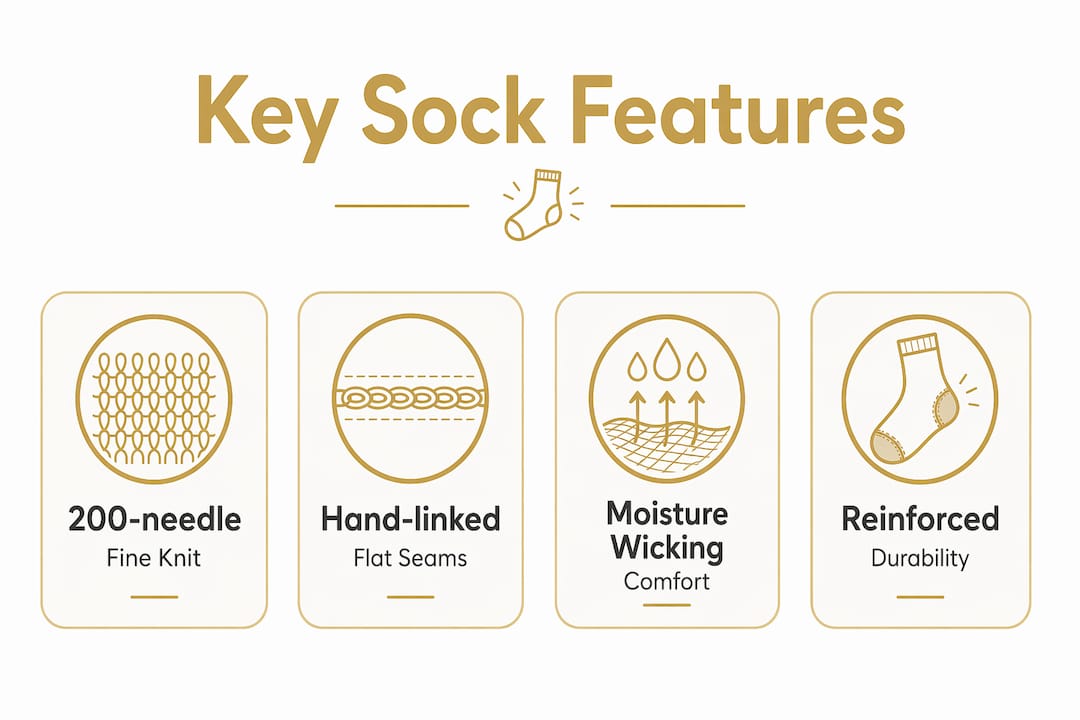
Hand-linked flat toe seams reduce pressure and irritation inside dress shoes compared to machine-looped seams. Flat seams prevent hotspots that develop over a full working day. This is a detail that is often invisible before purchase but felt within the first hour of wear.
Pro Tip: Run your finger across the toe seam before buying. A flat, barely perceptible ridge indicates hand-linking. A raised, bumpy seam indicates machine-looping and will cause discomfort by midday.
How do quality socks improve comfort and foot health at work?
Quality socks act as an engineered system that protects both foot health and expensive footwear across long workdays. This framing matters because it shifts the question from “why spend more on socks?” to “why would you not protect a £300 pair of shoes with a £15 pair of socks?”
Moisture management and odour control
Merino wool absorbs up to 35% of its own weight in moisture vapour without feeling wet. That is 30 times more than polyester. The practical result is that your feet stay dry and fresh through back-to-back meetings, without the odour that builds up in synthetic fibres by early afternoon.
Premium merino and long-staple cotton blends actively wick moisture away from the skin, unlike 100% polyester, which traps warmth and encourages bacteria growth. Bacteria cause both odour and skin irritation. Choosing the right fibre is the single most effective way to prevent both.
Blister and friction prevention
The key benefits of quality construction for foot health include:
- Cushioned soles absorb impact during long periods of standing or walking between offices and meetings.
- Flat toe seams eliminate the ridge that causes hotspots inside close-fitting dress shoes.
- Reinforced heel and toe zones resist wear in the highest-friction areas, extending the sock’s life and maintaining padding where it is needed most.
- Consistent elastane content keeps the sock in position, preventing bunching that creates pressure points.
The American Podiatric Medical Association recommends moisture-wicking blends for foot health. Blisters and fungal infections are not just painful. They reduce your ability to focus during high-stakes professional situations.
Reinforced heel and toe knitting extends lifespan significantly by resisting wear in high-friction areas. Unreinforced socks thin out and develop holes within weeks of regular use. Reinforced zones last months to years longer.
Why do style and appearance matter when choosing professional socks?
A sock is the last detail most professionals consider and the first detail a sharp observer notices. The visual gap between trouser hem and shoe is critical to a professional silhouette. When you sit down and your trousers ride up, bare skin or a sagging sock breaks the line of an otherwise polished outfit.
The psychology behind your sock choice
Psychological studies show that patterned or vibrant socks are perceived as markers of confidence and attention to detail. Wearing quality socks intentionally influences your mindset and confidence during high-pressure professional interactions. This is the enclothed cognition effect: what you wear shapes how you think and perform, not just how others perceive you.
Subtle patterns and considered colour choices signal that you pay attention to the details others overlook. A navy suit with a plain white shirt is standard. The same suit with a pair of well-chosen patterned socks in a complementary colour communicates personality without breaking a formal dress code.
Over-the-calf length for a polished result
Experts recommend over-the-calf socks for formal dress to maintain polish in visual communication. Over-the-calf socks stay up without garters, close the visual gap completely, and do not slide down during the day. For professionals in client-facing roles, this is the most practical upgrade available in the sock category.
The business sock guide from Sock Geeks covers the right material, style, and colour choices for workplace wear. Getting this right takes less time than choosing a tie, and the impact on your overall appearance is comparable.
How to select and care for quality socks to maximise their lifespan
Choosing the right sock is straightforward once you know what to look for. Caring for them correctly is what separates professionals who replace their socks every three months from those who wear the same quality pairs for years.
Selecting the right pair
- Check the fibre blend. Look for 60–80% merino wool or combed cotton, with nylon and elastane making up the remainder. Avoid socks with more than 30% synthetic content as the primary fibre.
- Inspect the toe seam. A flat, hand-linked seam is the mark of quality construction. If the seam is raised or bulky, the sock will cause discomfort in fitted shoes.
- Choose over-the-calf for formal wear. This length stays up, covers the visual gap, and maintains its position throughout the day without elastic digging into the calf.
- Look for reinforced zones. Reinforced heels and toes indicate the manufacturer has addressed the areas that wear out first.
The buyer’s guide to high-quality sock designs from Sock Geeks covers each of these markers in detail, with visual examples of what to look for before purchasing.
Caring for quality socks correctly
Washing above 40°C accelerates elastic breakdown and causes colour fading, degrading sock performance faster than regular wear. Cold washing and air drying preserve elasticity and maintain the structural integrity of the fibre blend. This single habit extends the life of a quality pair significantly.
Rotating between at least three to four pairs of the same style allows the elastic to recover between wears. Elastic that is compressed daily without recovery time loses its tension faster. Rotation is the simplest way to protect your investment.
Pro Tip: Turn quality socks inside out before washing. This protects the outer surface from friction in the drum and preserves both colour and texture far longer than washing them right-side out.
For a deeper look at how merino wool socks perform across seasons and care routines, Sock Geeks has a dedicated guide covering everything from washing temperatures to storage.
Key takeaways
Quality socks are engineered garments that protect foot health, preserve expensive footwear, and signal professional attention to detail through superior fibre blends, construction techniques, and considered style choices.
| Point | Details |
|---|---|
| Fibre blend determines performance | Aim for 70% natural fibre, 15–25% nylon, and 1–3% elastane for comfort and durability. |
| Construction quality is visible | Hand-linked toe seams and 200-needle knitting define premium socks and prevent foot discomfort. |
| Moisture management matters | Merino wool absorbs 30 times more moisture than polyester, keeping feet dry and odour-free. |
| Style signals professionalism | Over-the-calf length and considered patterns close the visual gap and communicate attention to detail. |
| Care extends lifespan | Cold washing, air drying, and rotating pairs preserves elasticity and colour for years of wear. |
What I have learned from years of watching professionals overlook their socks
The most common mistake I see professionals make is treating socks as a commodity. They spend considerable thought on suits, shoes, and ties, then grab whatever is cheapest in a multipack. The result is a polished outfit undermined by sagging, faded fabric that bunches inside a quality shoe by lunchtime.
The second mistake is buying the right fibre but washing it incorrectly. I have seen genuinely good merino socks destroyed in three washes because someone put them through a hot cycle. The elastic breaks down, the shape goes, and the sock becomes unwearable. The sock did not fail. The care routine did.
What actually works is treating your sock drawer the way you treat the rest of your wardrobe. Buy fewer pairs, buy better ones, and look after them. A well-chosen pair of over-the-calf merino socks in a considered pattern does something that no other item of clothing quite manages. It tells the room you pay attention to the details that most people miss. In a professional context, that signal is worth more than its price tag suggests.
The complete guide to building a professional sock wardrobe is the resource I wish I had found earlier. It covers selection, rotation, and care in one place.
Quality socks for professionals, chosen by Sock Geeks
Sock Geeks builds each pair around the same principles covered in this guide: high-quality natural fibres, precise construction, and designs that work within professional dress codes without sacrificing personality.

Every pair in the Sock Geeks collection uses ethically sourced materials and is manufactured to the standards that make a genuine difference to daily comfort. The premium socks collection covers everything from merino wool dress socks to patterned options that add character to formal attire. Sock Geeks holds a 4.72 customer rating, built on consistent quality and attention to the details that busy professionals notice. Browse the full range at Sock Geeks and find the pair that fits your working day.
FAQ
What fibre blend is best for professional dress socks?
The best blend is approximately 70% merino wool or combed cotton, 15–25% nylon, and 1–3% elastane. This combination delivers moisture management, durability, and a secure fit throughout the working day.
Why do over-the-calf socks suit formal professional wear?
Over-the-calf socks stay up without garters and close the visual gap between trouser hem and shoe when sitting. Experts recommend this length for formal dress to maintain a polished silhouette in client-facing settings.
How do quality socks protect foot health at work?
Quality socks reduce friction, wick moisture away from the skin, and prevent the bacteria growth that causes odour and fungal infections. The American Podiatric Medical Association recommends moisture-wicking blends specifically for this reason.
How should I wash quality socks to make them last?
Wash at or below 40°C and air dry rather than tumble dry. Washing above 40°C accelerates elastic breakdown and causes colour fading, which shortens the lifespan of even the best-made socks.
Can patterned socks work in a formal professional environment?
Patterned socks in complementary colours signal confidence and attention to detail without breaking formal dress codes. Psychological research shows they are perceived as markers of personality and professionalism rather than informality.





Leave a comment