






The best socks for frequent travellers are graduated compression socks rated at 15–20 mmHg, made from temperature-regulating materials such as merino wool or bamboo charcoal blends. These two criteria, compression level and fabric choice, determine whether your feet arrive swollen and sore or comfortable and ready to go. Podiatric guidance consistently points to this combination as the most effective for managing circulation, moisture, and fatigue during long journeys. Getting these two things right makes every other sock decision much easier.
1. What are the best socks for frequent travellers?
Graduated compression socks are the clinically recommended choice for frequent travellers. The term “graduated compression” means the sock applies the highest pressure at the ankle and gradually reduces pressure as it moves up the calf. This design actively pushes blood back towards the heart rather than letting it pool in the lower leg.
The recommended compression range for healthy travellers on flights under six hours is 15–20 mmHg. This level balances swelling prevention with everyday comfort. Firmer options at 20–30 mmHg exist for travellers with specific medical needs, but they are not necessary for most people and can discourage consistent wear due to tightness.
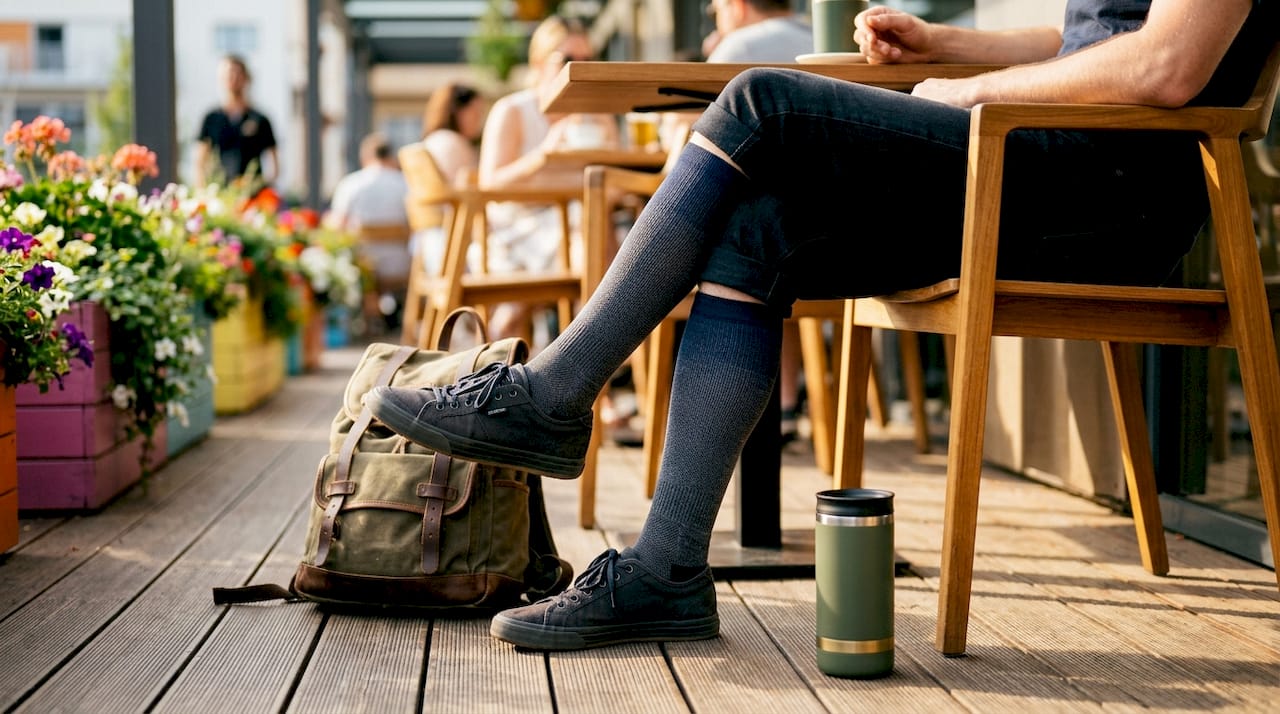
Fashion compression socks often lack true medical-grade gradient pressure. That means they may look the part but fail to prevent swelling effectively. Always check that the product specifies a graduated mmHg rating, not just “compression” as a vague marketing term.
2. Why compression matters on long flights
Sitting still for hours reduces blood flow in the lower legs significantly. This leads to swelling, fatigue, and in some cases, a risk of deep vein thrombosis (DVT). DVT is a blood clot that forms in a deep vein, most commonly in the leg, and it is a genuine concern for frequent long-haul travellers.
Proper graduated compression requires the tightest fit at the ankle, with pressure decreasing steadily up the calf. This gradient is what makes the sock work as a circulatory aid rather than simply a tight garment. Without that gradient, the sock does nothing clinically useful.
Timing matters as much as the sock itself. Put compression socks on 30–60 minutes before departure and keep them on until landing on flights over four hours. Waiting until you are already seated and swollen reduces their effectiveness considerably.
- Wear socks before boarding, not after you have been seated for an hour
- Keep them on for the full duration of flights over four hours
- Remove them after landing once you are moving freely again
- Combine wearing them with regular aisle walks and seated leg exercises
Pro Tip: Set a reminder on your phone to put your compression socks on while you are still at home or in the departure lounge. Once you are in a cramped aircraft seat, putting them on becomes much harder.
3. What materials deliver the best comfort in travel socks?
Fabric choice determines how your feet feel after eight hours in a pressurised cabin. The cabin environment is dry, temperature-variable, and confined, which means your socks need to manage moisture, regulate temperature, and resist odour simultaneously.
Merino wool offers natural temperature regulation, odour resistance, and moisture wicking that synthetic fabrics cannot fully replicate. It keeps feet warm in cold cabins and cool when temperatures rise, without retaining sweat. Merino wool blends are the top choice for long-haul comfort.
Bamboo charcoal blends are a strong second option. They are exceptionally soft against the skin, manage moisture well, and have natural antibacterial properties. Travellers with sensitive skin often find bamboo blends more comfortable than wool.
Synthetic blends using nylon and spandex offer durability and faster drying times. They are practical for multi-leg trips where you need socks to dry overnight. The trade-off is that they regulate temperature less effectively than natural fibres.
- Merino wool: best for temperature regulation and odour control on long-haul flights
- Bamboo charcoal: best for sensitive skin and moisture management
- Nylon/spandex blends: best for durability and quick drying on multi-leg trips
Pro Tip: Pack at least one merino wool pair for overnight flights. The natural fibre keeps feet comfortable across a wider temperature range than any synthetic alternative.
4. Which sock lengths and fits work best for travellers?
Sock length is a practical decision, not just a style one. The right length determines how well the sock addresses swelling and how easy it is to manage in a confined aircraft seat.
Knee-high compression socks cover the blood-pooling zones most affected during travel: the feet, ankles, and lower calves. They are easier to put on and remove than thigh-highs and provide sufficient coverage for the vast majority of travellers. Thigh-high stockings are rarely necessary for travel and are considerably harder to manage in a small seat.
Wide-calf sizing is worth seeking out if standard socks leave red marks or feel restrictive. A sock that is too tight at the top of the calf can actually impede circulation rather than improve it, which defeats the purpose entirely.
Seamless toe or linked toe cage designs reduce irritation and make putting socks on and removing them easier during travel. This matters more than most travellers expect. Struggling to pull on a compression sock in a tiny aircraft toilet is genuinely unpleasant.
- Choose knee-high length as your default for travel
- Check for wide-calf sizing if standard socks leave marks
- Look for seamless or linked toe designs for easier wear
- Avoid thigh-highs unless specifically advised by a medical professional
5. How to choose socks based on your travel type
Not every trip demands the same sock. Matching your sock choice to the journey type saves money and improves comfort.
For short flights under four hours, lighter compression at 15–20 mmHg in a mid-calf or knee-high style is sufficient. Swelling risk is lower on shorter journeys, and a lighter sock is easier to wear throughout the day if you have meetings or activities after landing.
For long-haul flights over six hours, knee-high socks at 15–20 mmHg remain the standard recommendation for healthy travellers. Athletic travellers or those with larger calves may benefit from firmer 20–30 mmHg options, but only if they have worn that level before and know they can tolerate it for the full flight duration.
| Travel type | Recommended compression | Suggested length |
|---|---|---|
| Short flight (under 4 hours) | 15–20 mmHg | Mid-calf or knee-high |
| Long-haul flight (over 6 hours) | 15–20 mmHg | Knee-high |
| Athletic traveller or larger calves | 20–30 mmHg | Knee-high |
| Road trip or train journey | 15–20 mmHg or lighter | Mid-calf |
| Multi-leg journey | 15–20 mmHg with quick-dry fabric | Knee-high |
For multi-leg journeys, prioritise socks with moisture-wicking synthetic blends that dry overnight. Carrying two pairs and alternating them is far more practical than relying on a single pair across three flights.
6. Budget vs premium: what is worth paying for?
Premium compression socks for travel typically cost between $35 and $55 per pair, while budget options in multipacks can be as low as $5 per pair. That price gap reflects real differences in fabric quality, compression accuracy, and durability.
Budget multipacks are useful for short trips where you want disposable convenience. They often use basic synthetic blends and may not maintain consistent compression after multiple washes. For frequent travellers who fly regularly, the cost per wear on a quality pair is lower than it appears.
Premium merino wool or medical-grade compression socks justify their price through longevity, comfort, and consistent performance. A quality pair washed correctly can last well over a year of regular use. The benefits of investing in premium socks extend beyond comfort to foot health, particularly for travellers who fly more than once a month.
- Budget options: fine for occasional travel, limited durability
- Mid-range synthetic blends: good durability, adequate compression
- Premium merino or medical-grade: best comfort, longest lifespan, most consistent compression
Key takeaways
The most effective travel socks combine 15–20 mmHg graduated compression with natural fibre fabrics like merino wool, worn from before departure until landing on flights over four hours.
| Point | Details |
|---|---|
| Compression level | 15–20 mmHg is the clinically recommended range for most healthy travellers. |
| Fabric choice | Merino wool and bamboo blends regulate temperature and manage moisture better than basic synthetics. |
| Sock length | Knee-high is the most practical and effective length for travel-related swelling. |
| Timing of wear | Put socks on 30–60 minutes before departure for maximum circulatory benefit. |
| Compression alone is not enough | Combine wearing compression socks with regular movement and aisle walks during long flights. |
What I have learned from years of long-haul travel
The single biggest mistake I see frequent travellers make is treating compression socks as a medical accessory rather than standard kit. People pack noise-cancelling headphones, neck pillows, and eye masks without a second thought, yet they skip the one item that directly protects their circulation.
I have worn compression socks on flights from London to Singapore and back, and the difference in how my legs feel on arrival is not subtle. Without them, my ankles swell noticeably by hour six. With a good merino wool pair at 15–20 mmHg, I land feeling close to how I boarded.
The other thing nobody tells you is that compression socks are not a substitute for movement. Get up every 90 minutes. Do calf raises in the aisle. The socks support your circulation; your movement drives it. Both matter.
Care for your socks properly and they will last. Wash compression socks in cool water and air dry them flat. Heat degrades the elastic fibres that create the compression gradient, and a sock that has lost its elasticity has lost its function.
— Amanda
Sock Geeks: quality socks built for the way you travel
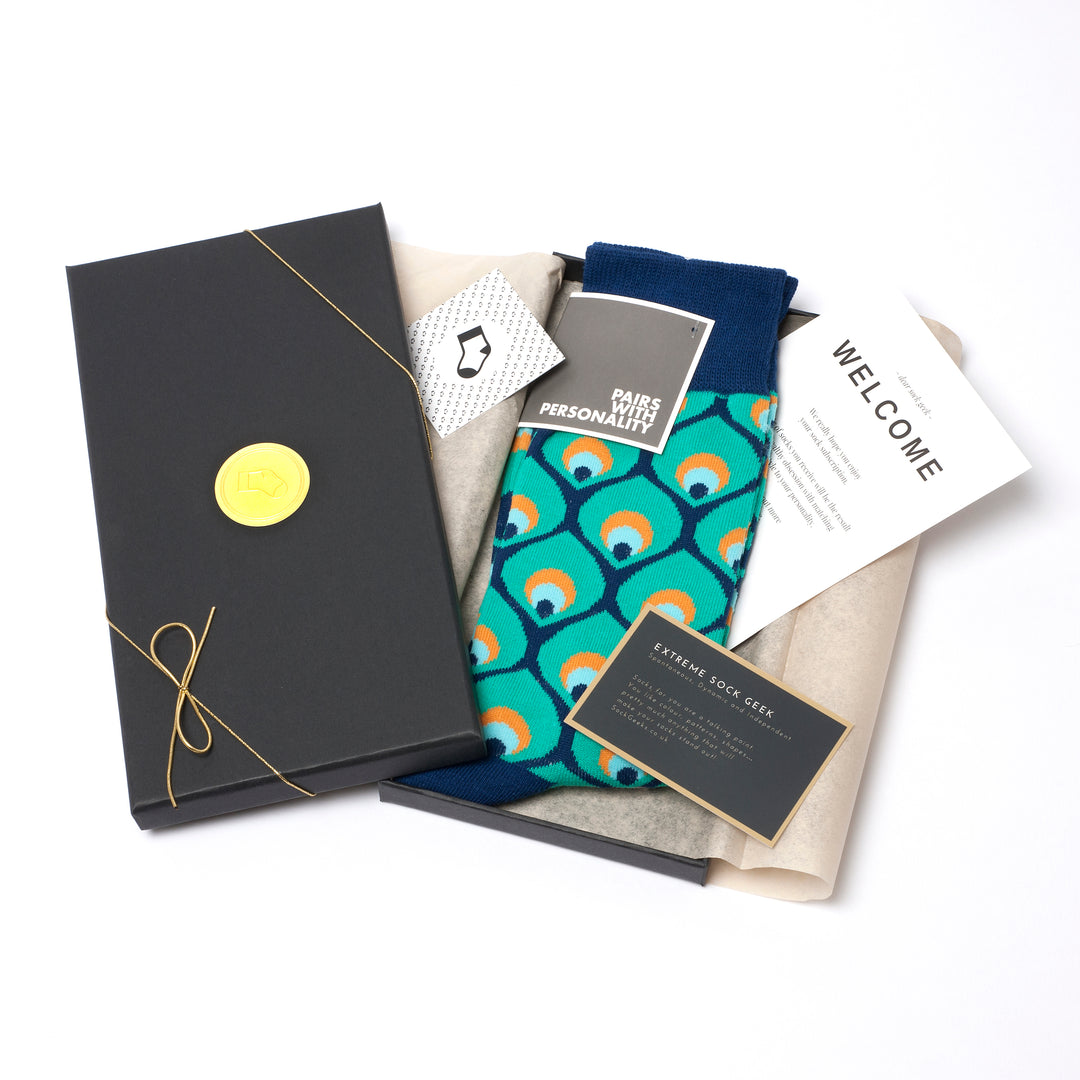
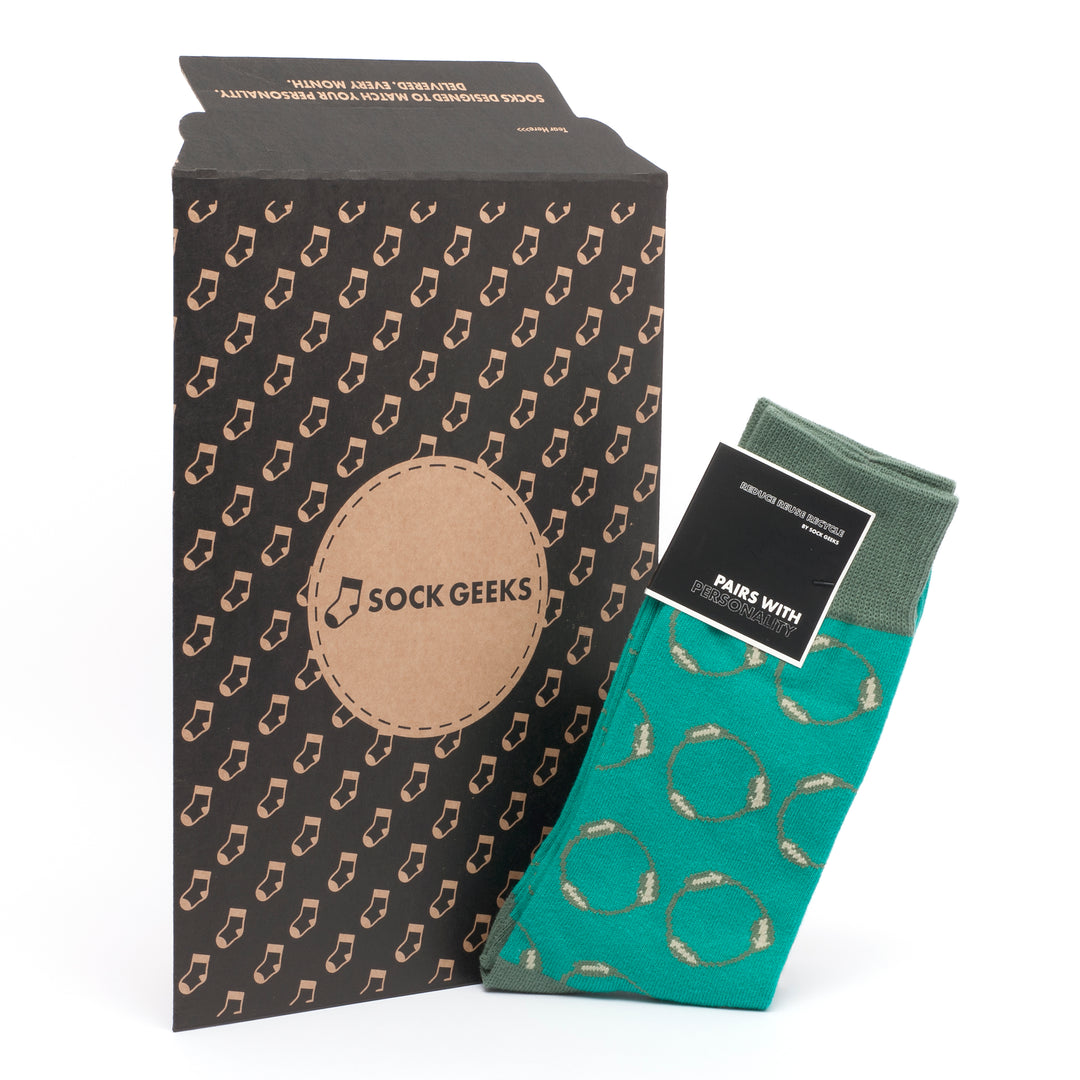
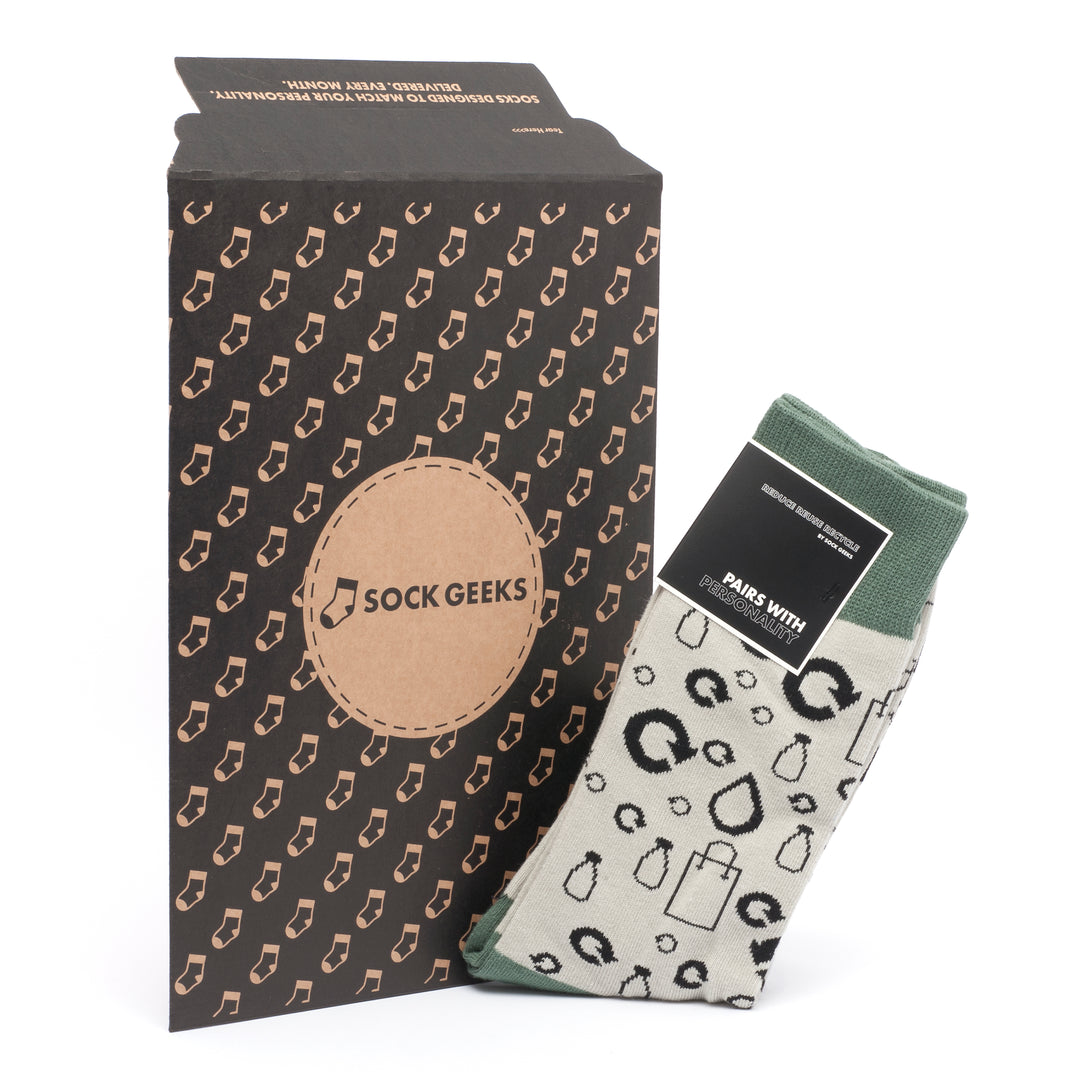
Frequent travellers deserve socks that perform as hard as they do. Sock Geeks curates premium-quality socks made from high-quality, ethically sourced materials, with options suited to the demands of regular travel. The Sock Geeks subscription service takes the effort out of restocking, delivering carefully selected pairs to your door based on your personal preferences.

With a 4.72 customer rating and a focus on natural fibres and quality construction, Sock Geeks is one of the UK’s most trusted names for sock enthusiasts. Whether you want a regular supply of travel-ready socks or a curated gift box for a fellow frequent flyer, Sock Geeks has you covered. Visit Sock Geeks to find your next favourite pair.
FAQ
What compression level is best for long flights?
The optimal compression level for most healthy travellers on long flights is 15–20 mmHg. This range prevents swelling without being so tight that it discourages consistent wear.
Are knee-high socks enough for travel?
Yes. Knee-high compression socks cover the feet, ankles, and lower calves, which are the primary zones where blood pools during travel. Thigh-highs are rarely necessary for healthy travellers.
What is the best fabric for comfortable travel socks?
Merino wool is the best fabric for long-haul travel socks. It regulates temperature naturally, resists odour, and wicks moisture, making it well suited to the dry, variable conditions inside an aircraft cabin.
When should I put compression socks on before a flight?
Put compression socks on 30–60 minutes before departure. Wearing them before you board means the compression is already working when you sit down, rather than after swelling has begun.
Do I need to move around even if I am wearing compression socks?
Compression socks support circulation but do not replace movement. Combine wearing them with calf raises, ankle rotations, and aisle walks every 90 minutes for the best results on long flights.
Recommended
- Why premium socks are worth buying: the full guide – Sock Geeks
- Sock Geeks | Sock Subscription | Quality Men’s and Women’s Socks
- More about Sock Geeks l Sock Blog





Leave a comment