





How socks are sustainably produced
Sustainable sock production is defined as the process of making socks using eco-friendly fibres, certified ethical manufacturing, and durable construction to minimise environmental and social harm. Understanding how socks are sustainably produced matters more than ever: 67% of consumers now consider sustainability when buying apparel, and 42% switched to more sustainable brands in the past year. Certifications such as GOTS (Global Organic Textile Standard), OEKO-TEX, and BSCI are the recognised industry benchmarks that separate genuine sustainability from marketing noise. True eco-friendly sock production requires all three pillars: responsible fibres, verified factory practices, and a product built to last.
What materials are used in sustainable sock production?
The fibre a sock is made from determines most of its environmental footprint. Three materials dominate genuinely sustainable sock manufacturing: organic cotton, recycled polyester, and bamboo lyocell.
Organic cotton
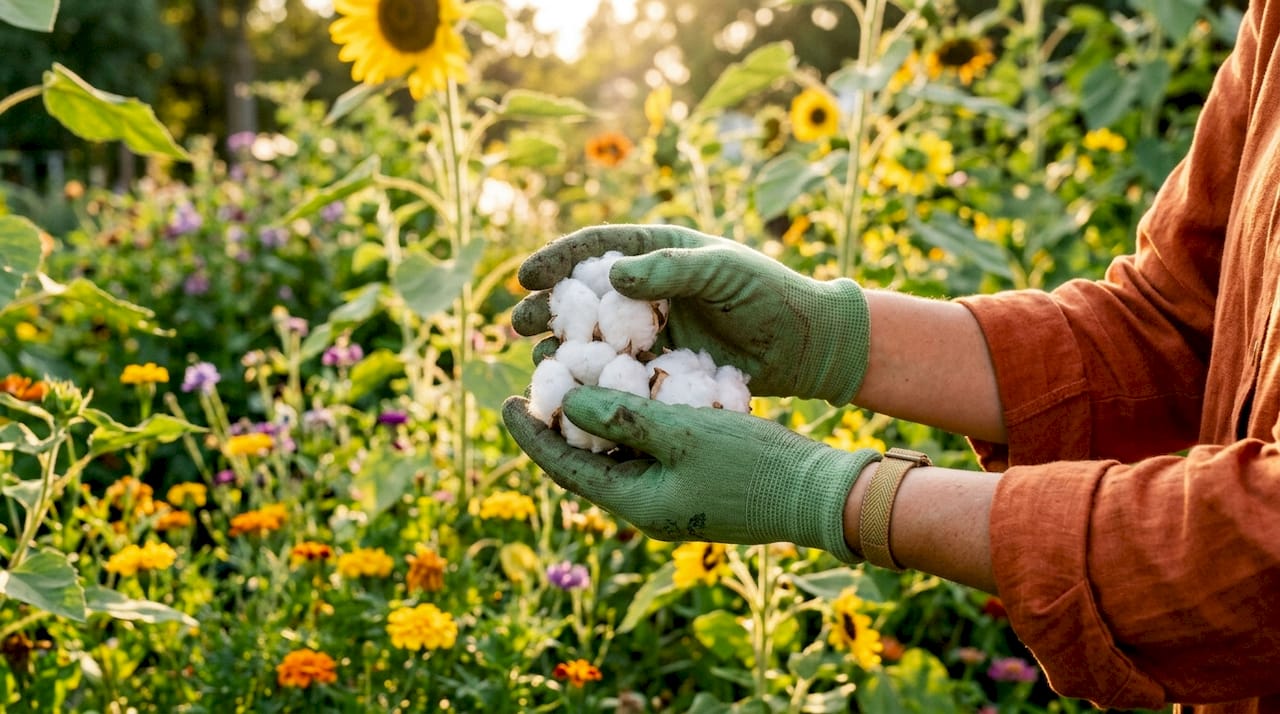
Organic cotton is grown without synthetic pesticides, herbicides, or genetically modified seeds. Organic cotton farming uses 91% less irrigation water than conventional methods because it relies on natural rainfall and biological pest control. That reduction in water use is significant: conventional cotton is one of the most water-intensive crops on earth. Sock Geeks sources certified organic cotton precisely because the environmental gains at the fibre stage are so substantial. You can read more about the benefits of organic cotton and why it outperforms standard cotton for both comfort and sustainability.
Recycled polyester (rPET)
Recycled polyester is made by breaking down post-consumer plastic bottles into fibre. Each pair of recycled polyester socks diverts approximately 3–5 plastic bottles from landfill or ocean waste. That is a direct, measurable impact rather than an abstract claim. The fibre performs well in blended socks because it adds durability and moisture management alongside natural fibres. Sock Geeks covers the full picture of recycled sock materials for shoppers who want to understand what rPET production actually involves.
Bamboo lyocell
Bamboo lyocell uses a closed-loop solvent process in which the chemical solvent is captured and reused, producing minimal waste. This is meaningfully different from bamboo viscose, which uses an open chemical process that releases harmful solvents into the environment. The distinction matters because many socks labelled “bamboo” are actually made from viscose, not lyocell.
Pro Tip: Always check whether bamboo socks specify lyocell or viscose on the label. Lyocell indicates a genuinely low-impact process; viscose does not.
| Fibre | Key environmental benefit | Watch out for |
|---|---|---|
| Organic cotton | 91% less irrigation water | Must be GOTS certified to verify claims |
| Recycled polyester | Diverts 3–5 plastic bottles per pair | Check for GRS certification |
| Bamboo lyocell | Closed-loop solvent process | Viscose labelled as bamboo is not equivalent |
How does sustainable sock manufacturing reduce environmental impact?
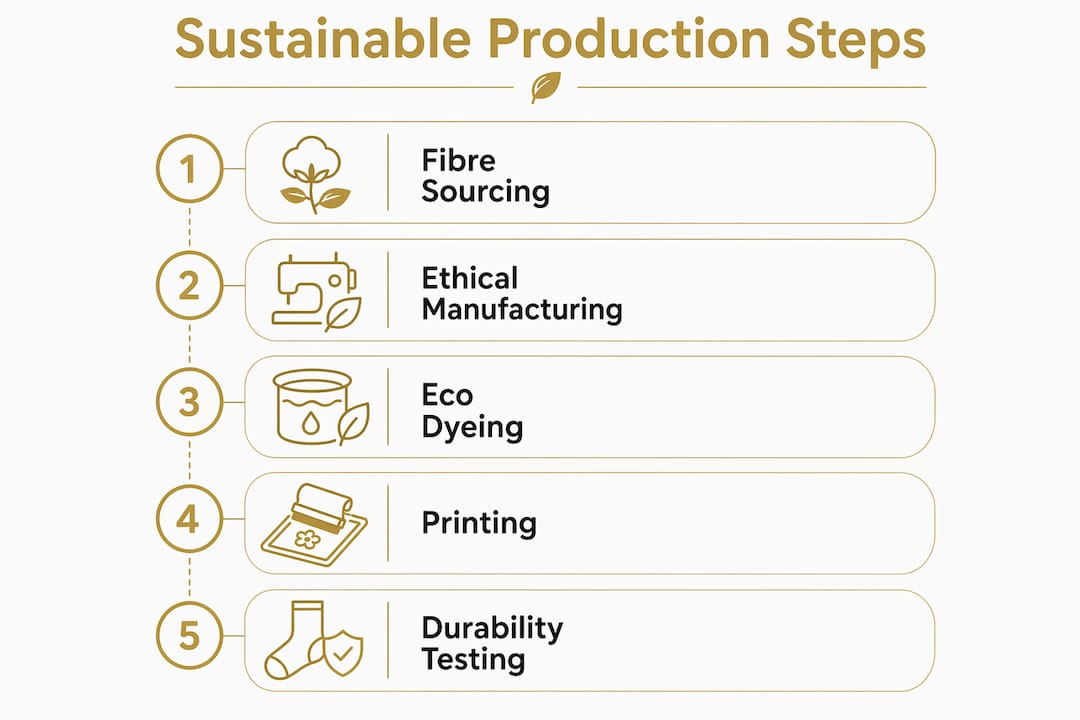
Choosing the right fibre is only the first step. The factory where socks are knitted, dyed, and finished determines whether the production process is genuinely sustainable or simply greenwashed.
Ethical labour conditions are verified through certifications such as BSCI (Business Social Compliance Initiative) and SMETA (Sedex Members Ethical Trade Audit). These audits check wages, working hours, health and safety, and freedom of association. Sustainability must extend beyond fibre to responsible factory practices, and certifications like BSCI or SMETA are the standard way to verify those conditions. A sock made from organic cotton in a factory with poor labour practices is not a sustainable product.
Dyeing is one of the textile industry’s biggest pollution sources. Reactive dyes chemically bond with natural fibres, creating permanent colour with less water use and less toxic wastewater than conventional dyes. Most GOTS-certified sock production uses reactive dyes exclusively. This matters because conventional dyeing can release heavy metals and carcinogenic compounds into waterways if wastewater is untreated.
Printing processes also carry environmental weight. Water-based inks used in sock printing produce zero VOC (volatile organic compound) emissions, making them safer for workers and the surrounding environment than petrochemical solvents. Responsible factories also manage cutting waste by recycling fabric scraps and treating wastewater before discharge.
Pro Tip: When evaluating a sock brand’s sustainability credentials, ask specifically about factory certifications, not just fibre sourcing. A GOTS-certified fibre processed in an uncertified factory loses much of its environmental advantage.
Key manufacturing practices that define genuinely sustainable production:
- Reactive dyeing with low-water, low-toxicity processes
- Water-based inks with zero VOC emissions
- Wastewater treatment before discharge
- Cutting scrap recycling within the factory
- BSCI or SMETA audits for labour conditions
- Energy reduction programmes using renewable sources
How do you understand sustainable sock certifications?
Certifications are the only reliable way to verify sustainability claims. The four most relevant standards for sustainable socks are GOTS, OEKO-TEX Standard 100, GRS, and RCS.
GOTS certification covers the entire organic textile supply chain, including both ecological and social criteria. It is audited annually by accredited bodies such as Ecocert. GOTS is the most demanding standard because it governs every stage from raw fibre to finished product, including dyeing, processing, and labour conditions.
OEKO-TEX Standard 100 focuses on the finished product, testing it against more than 100 parameters for harmful substances. It is renewed yearly with independent lab tests. OEKO-TEX does not verify the supply chain or labour conditions, but it does confirm the sock is safe for skin contact. Both labels on a single sock indicate strong sustainability standards.
GRS (Global Recycled Standard) and RCS (Recycled Claim Standard) apply specifically to products containing recycled content. GRS verifies the entire chain of custody for recycled materials; RCS verifies only the recycled content claim without the broader social and environmental requirements of GRS.
How to evaluate a certification claim on a sock label:
- Look for a licence number or certification code on the label or brand website.
- Verify the code in the relevant public database (GOTS, OEKO-TEX, or Textile Exchange).
- Check which standard applies: fibre only, finished product, or full supply chain.
- Confirm the certification is current, not expired.
- Treat any claim without a verifiable code as unsubstantiated.
The EU Green Claims Directive, expected to come into force by 2027, will require all environmental claims to be substantiated by audited scientific evidence. Brands that rely on vague “eco-friendly” language without certification will face legal consequences. Buying certified socks now means supporting brands already prepared for that standard.
Why does durability matter for sustainable socks?
A sock that lasts twice as long has half the environmental footprint per wear. This is the lifecycle argument for sustainable sock construction, and it is one that most shoppers overlook.
Genuinely sustainable socks are built with fibre blends chosen for longevity, not just softness. A typical high-quality sustainable blend combines organic cotton for breathability, recycled polyester for strength and shape retention, and a small percentage of elastane for fit. Each fibre plays a specific role. Removing any one of them reduces the sock’s lifespan and increases the frequency of replacement.
Durability also reduces packaging waste. Replacing a pair of socks every three months generates four times the packaging waste of a pair replaced annually. That cumulative impact across millions of consumers is substantial. Sock Geeks publishes guidance on identifying quality sock construction so shoppers can assess longevity before buying.
Pro Tip: Check the reinforcement at the heel and toe. Double-knit or terry-loop reinforcement in these high-wear zones is the clearest sign that a sock is built to last rather than built to a price point.
Key construction features that extend sock lifespan:
- Reinforced heel and toe zones using double-knit or terry-loop techniques
- Fibre blends that balance softness, strength, and elasticity
- Consistent gauge knitting that prevents thinning over repeated washing
- Flat seam toe closures that resist splitting at stress points
How can you make informed choices when buying sustainable socks?
Buying sustainable socks requires checking three things: fibre certification, factory ethics, and construction quality. Prioritising only one of the three produces a partial result.
- Check for independently verified certifications. Look for GOTS, OEKO-TEX, or GRS labels with verifiable licence numbers. A logo without a code is not evidence of certification.
- Research the brand’s transparency. Brands committed to sustainability publish the names of their manufacturing partners, the certifications those factories hold, and the specific fibres used in each product.
- Balance all three pillars. A sock made from certified organic cotton in an uncertified factory, or a certified factory using non-sustainable fibres, does not meet the full standard of genuine sustainable production.
- Understand the trade-offs. Certified sustainable socks cost more because certification, ethical labour, and quality construction all carry real costs. That price premium reflects genuine investment, not marketing.
- Support brands that publish provenance information. Transparency about where and how socks are made is the clearest signal that a brand’s sustainability claims are real. Sock Geeks provides detail on British-made organic cotton socks and the sourcing standards behind them.
Key takeaways
Sustainable sock production requires verified certifications across fibre, factory, and finished product to deliver genuine environmental and social impact.
| Point | Details |
|---|---|
| Fibre choice is the foundation | Organic cotton, recycled polyester, and bamboo lyocell each offer measurable environmental benefits over conventional fibres. |
| Factory certification matters equally | BSCI and SMETA audits verify ethical labour; GOTS and reactive dyeing verify environmental manufacturing standards. |
| Certifications must be verifiable | Always check GOTS, OEKO-TEX, or GRS licence numbers in public databases before trusting a label. |
| Durability extends sustainability | A longer-lasting sock reduces replacement frequency, packaging waste, and total resource consumption per wear. |
| EU regulation is tightening | The EU Green Claims Directive, expected by 2027, will require audit-backed evidence for all environmental claims. |
The uncomfortable truth about “eco-friendly” socks
I have spent years reading sock labels, and the gap between what brands claim and what they can prove is wider than most shoppers realise. The word “eco-friendly” appears on products that have never been near a GOTS auditor or an OEKO-TEX lab. It costs nothing to print and carries no legal weight, at least not yet.
What I find genuinely encouraging is that the EU Green Claims Directive will change that. By 2027, vague environmental claims without audit-backed evidence will be legally indefensible in European markets. That is not a distant threat for brands; it is an immediate reason to get certified now or stop making the claims.
The other thing I would push back on is the idea that fibre choice alone defines sustainability. I have seen beautifully certified organic cotton socks produced in factories with no wastewater treatment and no labour audits. The fibre was clean; the process was not. True sustainability requires the full supply chain to be held to account, not just the raw material. Shoppers who understand this distinction make better choices and push the industry in the right direction.
My honest advice: buy fewer pairs, buy certified, and buy from brands that name their factories. That combination does more for sustainable textiles than any single “eco” label ever will.
Sock Geeks and sustainably produced socks
Sock Geeks sources certified organic cotton and recycled materials for its sock collections, with transparency about manufacturing standards built into its approach from the start.

Sock Geeks publishes information about its sourcing practices and the certifications behind its products, so shoppers can verify claims rather than take them on trust. The range covers everything from everyday organic cotton styles to premium blends designed for durability and comfort. Whether you are building a more considered wardrobe or looking for a gift that reflects genuine values, the Sock Geeks collection gives you certified options without the guesswork that comes with vague eco labelling. Ethical production and great design are not a trade-off here. They are the starting point.
FAQ
What does sustainable sock production actually mean?
Sustainable sock production combines eco-friendly fibres such as organic cotton or recycled polyester, certified ethical manufacturing processes, and durable construction. All three elements must be present for a sock to be genuinely sustainable rather than simply marketed as such.
What is the difference between GOTS and OEKO-TEX?
GOTS covers the entire supply chain, including social criteria and processing standards, while OEKO-TEX Standard 100 tests the finished product for harmful substances. Both certifications on a single sock indicate the strongest available sustainability credentials.
Are bamboo socks always sustainable?
Bamboo lyocell socks are genuinely low-impact because they use a closed-loop solvent process. Bamboo viscose socks are not equivalent; the viscose process releases harmful chemicals and is not considered sustainable. Always check which process is specified on the label.
How do I verify a sock brand’s sustainability claims?
Look for a GOTS, OEKO-TEX, or GRS licence number on the label or brand website, then check it in the relevant public certification database. Any claim without a verifiable code should be treated as unsubstantiated marketing.
Why do sustainable socks cost more?
The higher price reflects real costs: certified organic or recycled fibres, factory audits for labour and environmental standards, reactive dyeing processes, and quality construction for durability. That price premium is the cost of genuine sustainability, not a marketing premium.





Leave a comment